On this page
- The Magic Number: 195-205F (90-96C)
- Why Temperature Decides Whether Your Coffee Is Delicious or a Crime
- The Off-Boil Rule (Your No-Gadget Cheat Code)
- Best Water Temperature by Brew Method
- The Cold Brew Exception
- Kettle Tips: Gooseneck, Variable, and Thermometer Hacks
- Common Temperature Mistakes (Stop Doing These)
- Frequently Asked Questions
You bought the good beans. You weighed them like a scientist. And the cup still tastes like… regret. Before you blame the bag, let’s talk about the one variable most people never check: how hot the water actually was when it hit those grounds. Spoiler, it was probably wrong.
Here’s everything you need to nail it: the exact temperature range that makes coffee taste like coffee, why too hot turns bitter and too cool turns sour, how to tweak by brew method, the one cold brew exception, and the simplest trick on Earth for getting it right without buying a single gadget.
The Magic Number: 195-205F (90-96C)
The Specialty Coffee Association puts the ideal brew water at 195 to 205 degrees Fahrenheit (about 90 to 96 degrees Celsius). That’s the window where coffee gives up its good stuff without the bad stuff tagging along. Memorize it, tattoo it, set it as your phone wallpaper. Everything else in this article is just nuance around that one range.
Notice what’s NOT on that list: 212F. Boiling water. The thing your kettle defaults to. We’ll come back to that betrayal in a minute.
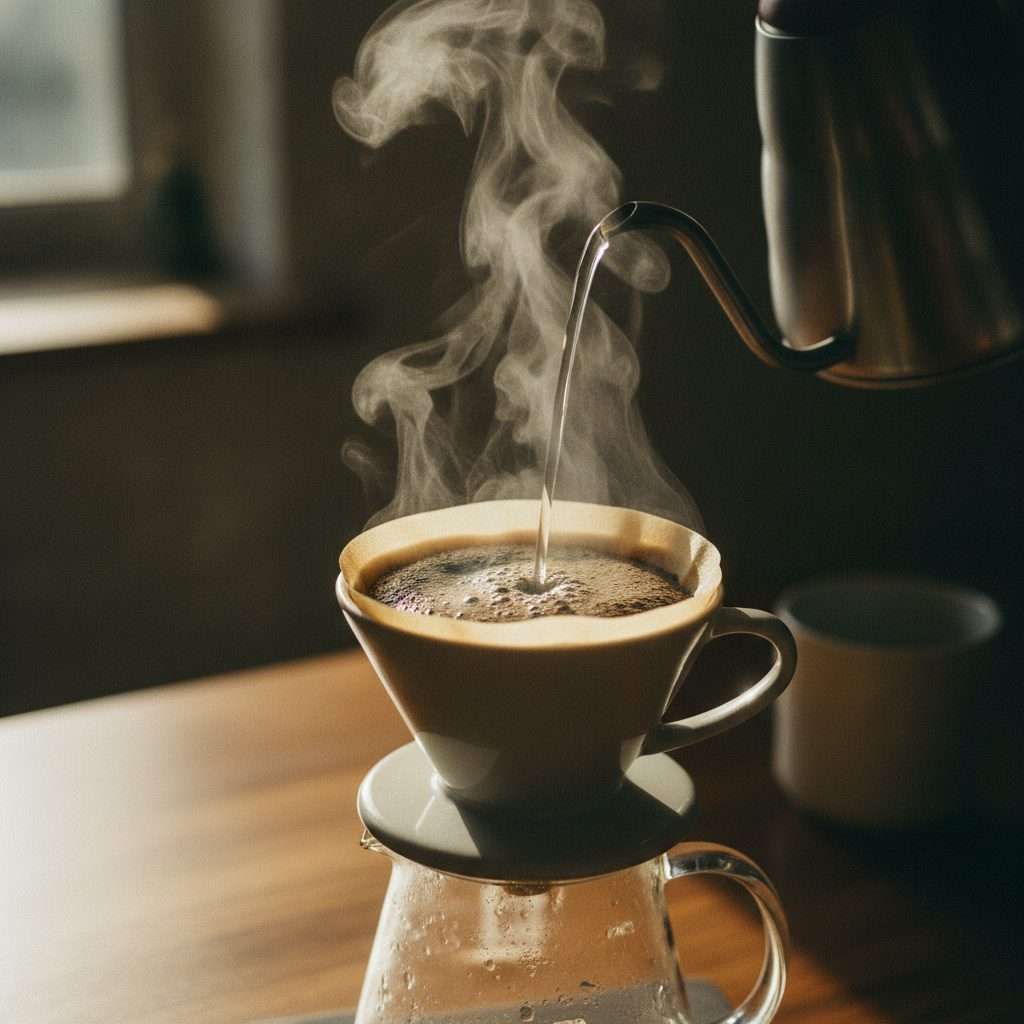
Why Temperature Decides Whether Your Coffee Is Delicious or a Crime
Brewing is just hot water dissolving stuff out of ground coffee. Fancy people call it extraction. And the compounds don’t all come out at the same speed.
- The bright, fruity, sour acids dissolve first and fast.
- The sweet, balanced sugars and caramels come out in the comfortable middle.
- The bitter, dry, ashy compounds come out last, and they come out faster when the water is hotter.
So temperature is basically the gas pedal on extraction. Aim for roughly 18 to 22 percent of the coffee’s mass to dissolve and you land in the sweet spot. Miss in either direction and your taste buds will narc on you immediately.
Too Hot = Bitter (Over-Extraction)
Water above 205F drags out those last-to-leave bitter compounds before you want them. The result tastes harsh, dry, hollow, sometimes downright burnt. If your coffee makes your mouth feel like sandpaper and the aftertaste is a grudge, your water ran too hot (or your grind was too fine, but that’s a different conversation, see the section below).
Too Cool = Sour (Under-Extraction)
Drop below 195F and the water never gets around to the sweet, balanced middle. You’re left with only those first-out sour acids. The cup tastes sharp, thin, salty, weak, like the coffee is missing its back half. People often mistake this for “too acidic beans” and buy a darker roast. Wrong fix. Heat your water properly first.
| Water Temp | What Happens | How the Cup Tastes |
|---|---|---|
| Below 195F (90C) | Under-extraction | Sour, sharp, thin, salty, weak |
| 195-205F (90-96C) | Balanced extraction | Sweet, balanced, full, clean |
| Above 205F (96C) | Over-extraction | Bitter, dry, harsh, ashy, burnt |
The Off-Boil Rule (Your No-Gadget Cheat Code)
No fancy kettle? No thermometer? No problem. Here’s the rule that’s saved more home brews than any single tip:
Boil your water, then take it off the heat and wait 30 to 45 seconds before pouring.
Freshly boiled water is 212F (100C), which is too hot. But it cools off shockingly fast once you kill the heat. In about half a minute it settles right into your 195-205F target. Lid off, in a cool kitchen, it cools even quicker. This single habit fixes more bitter coffee than any equipment upgrade.
One asterisk for the altitude crew: if you live somewhere high, water boils below 212F to begin with (Denver folks, you’re around 202F at a rolling boil). Up there, you barely need to wait at all, sometimes just a few seconds off the boil.
Best Water Temperature by Brew Method
The 195-205F range holds for every hot method, but each one has a sweet spot inside it. Here’s how the big four break down.
| Method | Target Temp | Why |
|---|---|---|
| Pour-Over | 198-205F (92-96C) | Thin filter bed loses heat fast; start hot |
| French Press | 195-200F (90-93C) | Long full-immersion steep; cooler avoids bitterness |
| Espresso | 195-205F (90-96C) | Machine holds ~200F; light roasts higher, dark lower |
| Drip Machine | 195-205F (90-96C) | Look for an SCA-certified machine that hits the range |
| Cold Brew | Room temp or cold | The exception (see below) |
Pour-Over
Start near the top, around 200-205F. A pour-over bed is shallow and exposed, so it sheds heat with every pour. Beginning a touch hot keeps the whole brew in range. Dialing in your pour-over technique alongside temperature is where the real magic lives.
French Press
Aim a little cooler, 195-200F. The grounds sit in the water for four minutes straight, so there’s plenty of contact time to extract. Go too hot here and that long soak tips into bitterness. Pair the right temp with the right grind in our French press guide.
Espresso
Most machines brew around 200F and let you nudge it. Light roasts like it hotter (closer to 204F) to coax out sweetness; dark roasts prefer it lower (around 195F) so they don’t scorch. Temperature is just one lever, see our home espresso guide for the rest.
Drip Machine
Here’s the dirty secret: a lot of cheap auto-drip machines never reach 195F. They brew lukewarm and call it coffee. If your machine makes flat, sour drip no matter what you do, the heater is the likely culprit. A quality coffee maker that’s certified to hit the range solves the problem in one purchase.
The Cold Brew Exception
Everything above goes out the window for cold brew, and that’s the whole point. Cold brew uses cool or room-temperature water and trades heat for time.
Extraction roughly doubles in speed for every 10C jump in temperature, so cold water has to make up the difference with a long soak. Steep coarse grounds for 12 to 24 hours, with about 16 hours hitting the sweet spot for most people. Room-temperature water extracts faster (sometimes 8 to 12 hours is plenty); fridge-cold water runs slower and pushes you toward the longer end.
Because there’s no heat to kill microbes, hygiene matters. Use a spotless vessel, and don’t let a room-temperature batch ride past 24 hours, it can actually grow mold like forgotten sun tea. The payoff is a smooth, low-acid, naturally sweet concentrate that hot brewing simply can’t replicate.
Kettle Tips: Gooseneck, Variable, and Thermometer Hacks
- Variable-temperature kettle: The luxury move. Set it to 200F and never think about it again. Worth it if you brew daily and like precision.
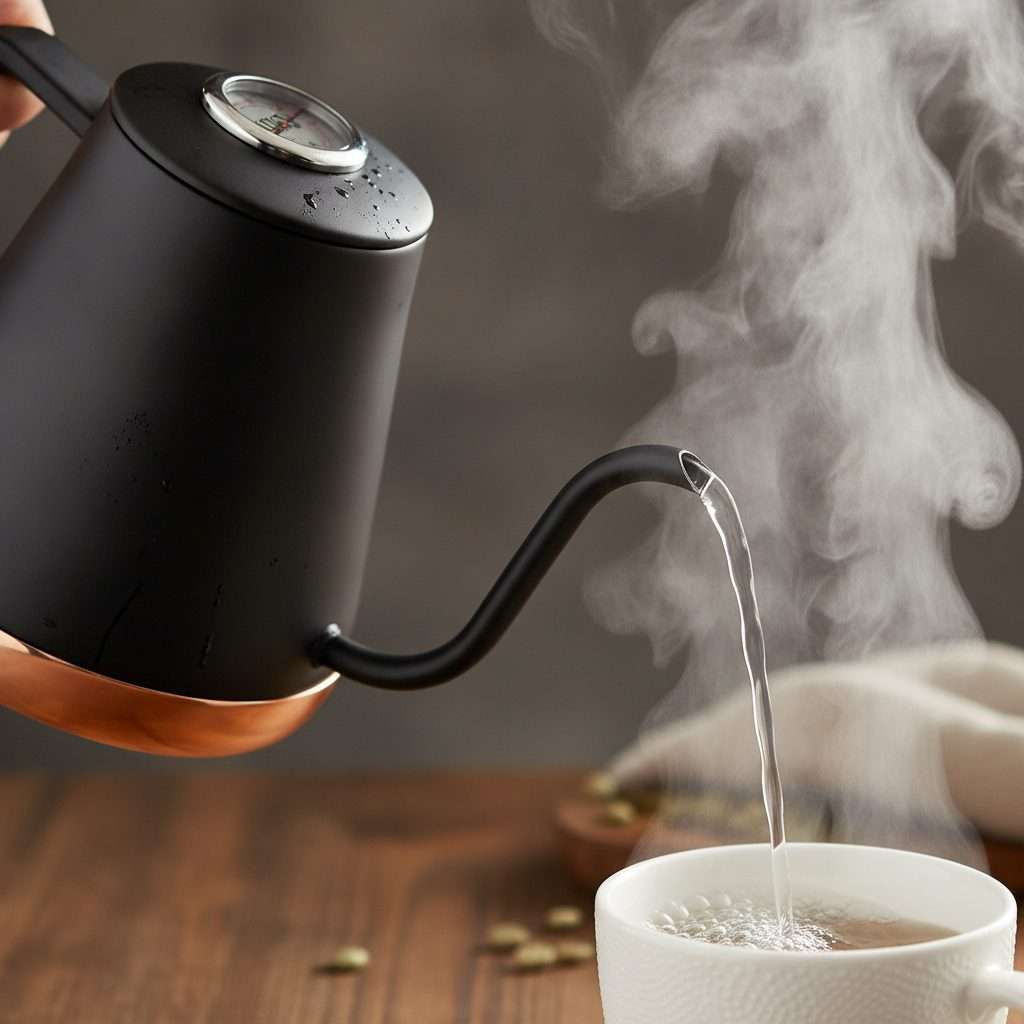
- Gooseneck kettle: The skinny spout gives you control over flow and pour spot, a game-changer for pour-over. Get one that’s also variable-temp and you’ve won.
- Standard kettle + off-boil rule: Boil, wait 30-45 seconds, pour. Totally legitimate. Don’t let anyone gatekeep you.
- Instant-read thermometer: A $10 probe takes the guessing out entirely. Stick it in, watch for 200F, go.
- Preheat everything: A cold ceramic mug or carafe steals heat instantly. Rinse your dripper, mug, and French press with hot water first so your carefully heated water stays in range.
And remember, temperature is one piece of the puzzle. Your coffee-to-water ratio, your grinder, and your water quality all share the stage. Nail the temp first, because it’s the easiest one to fix today.
Common Temperature Mistakes (Stop Doing These)
- Pouring straight off a rolling boil. 212F is too hot. Wait. Always wait.
- Microwaving water to “reheat” it. You can’t see the temp, it heats unevenly, and it tends to overshoot. Just don’t.
- Using a lukewarm drip machine and blaming the beans. Test your machine before you rebuy coffee.
- Ignoring the cold carafe. Hot water into a cold vessel can drop 10-20 degrees on contact. Preheat.
- Cranking temp to “fix” sour coffee that’s actually under-extracted from a coarse grind. Sometimes the answer is grinding finer, not boiling harder.
Frequently Asked Questions
Can I just use boiling water for coffee?
You can, but you shouldn’t pour it the instant it boils. Boiling water is 212F (100C), which sits above the ideal 195-205F range and tends to over-extract into bitterness. Boil, then let it rest 30 to 45 seconds off the heat. Now it’s perfect.
What temperature makes coffee taste sour?
Water below 195F (90C) is the usual cause of sour, sharp coffee. At those temps the water can’t extract the sweeter, balancing compounds, so you’re left with only the fast-dissolving acids. Raise your temp into the 195-205F window. If it’s still sour, look at your grind size next.
Does roast level change the ideal temperature?
Yes, slightly. Light roasts are dense and harder to extract, so they like the hotter end (200-205F). Dark roasts are porous and give up their compounds easily, so cooler water (195-198F) helps you avoid ashy bitterness. Medium roasts are happy right in the middle. More in our roast level guide.
How do I check water temperature without a thermometer?
Use the off-boil rule: bring water to a full boil, remove it from the heat, and count 30 to 45 seconds before pouring. That puts you reliably in the 195-205F range. At high altitude, where water boils cooler, wait less, just a few seconds.
Why is my drip coffee weak even with the right grind?
Many budget drip machines never heat water to 195F, leaving you with chronically under-extracted, watery coffee. If your grind and ratio are dialed in and the cup is still weak, the brewer’s heating element is likely the problem. An SCA-certified machine that reaches the proper range is the fix.
Bottom line: get your water into 195-205F and you’ve quietly upgraded every cup, no new beans required. Boil, breathe for 30 seconds, pour. Your future self, mid-sip, is already grateful.