
How to Make French Press Coffee, Step by Step
Here’s the truth nobody tells you: a French press makes a better cup than your fancy drip machine, costs about as much as two lattes, and has exactly zero buttons to break. If your French press coffee has ever come out bitter, muddy, or weirdly thin, it wasn’t the press. It was the technique. Stick with me and you’ll fix it today.
This guide gives you the whole thing, end to end: the exact coffee-to-water ratio, the right grind, the water temperature that actually matters, a minute-by-minute brewing timeline, the mistakes that wreck your cup, and a few tricks to make it genuinely special. No fluff, no flowchart. Just a great press of coffee, every single morning.
What French Press Coffee Actually Is (and Why It Tastes Better)
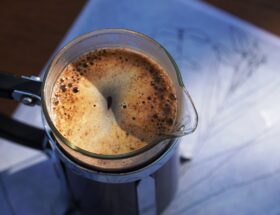
French press coffee, sometimes called plunger or press pot coffee, is full-immersion brewing. The grounds sit and steep in hot water the entire time, like a tea bag that means business. Then a metal mesh plunger pushes the grounds to the bottom and you pour off the good stuff on top.
Here’s why it matters: that metal mesh lets the coffee’s natural oils through. Paper drip filters trap them. Those oils are where a huge chunk of the body, the heavy mouthfeel, and the deep aromatics live. That’s the whole reason a French press cup tastes rounder and richer than the same beans run through a paper filter. You’re not imagining it.
A Quick History of the French Press
The plunger pot has murky origins, which is fitting for a device that makes such a moody cup. The first patent that actually looks like the French press we use today was filed in 1929 by an Italian designer named Attilio Calimani. Yes, Italian, not French, despite the name. Other versions floated around Europe in the late 1800s, and a Swiss-Italian company called Bodum later turned it into the household icon you probably have on your counter.
So when someone tells you the French press is some ancient French tradition, you can smile and let it go. The brew is timeless. The trivia is a little fuzzy. Both can be true.
What You Need to Brew French Press Coffee
The beautiful part: this is a short list. A French press is one of the most forgiving, low-gear ways to make a serious cup.
- A French press. Glass is classic and lets you watch the show. Stainless steel keeps coffee hotter and survives being dropped (no judgment). If you’ve been eyeing one, here’s the honest take on whether a plastic French press is worth it.
- Fresh, coarsely ground coffee. Grind quality is the single biggest variable people ignore. A burr grinder gives you even, coarse grounds; a blade grinder gives you uneven dust and bitterness. If you’re shopping, start with our picks for the best coffee grinder.
- A kettle. Anything that boils water works. A gooseneck kettle gives you control, but it’s a nice-to-have, not a must.
- A scale (strongly recommended). Weighing your coffee and water is the move that takes you from “decent” to “consistently great.” A cheap kitchen scale is fine, or see our roundup of the best coffee scales.
- A timer. Your phone is right there. Use it.
That’s it. No pods, no descaling, no $600 machine. And the right brewing equipment here is refreshingly cheap.
The Coffee-to-Water Ratio (Get This Right and You’re 80% There)
If you remember one number from this whole guide, make it this: 1:15. One gram of coffee for every 15 grams of water. Water weighs almost exactly one gram per milliliter, so 15 grams of water is 15 ml. That math is doing you a favor.
Run the numbers and it’s simple:
- 1 mug (about 350 ml water): roughly 23 g coffee
- Standard 8-cup / 1-liter press (1000 ml water): roughly 65–67 g coffee
- Half a 1-liter press (500 ml water): roughly 33 g coffee
No scale this morning? Rough rule of thumb: two level tablespoons of beans per six ounces of water. It’s not as precise, but it’ll keep you in the neighborhood. Want it bolder? Edge toward 1:13. Want it lighter and more tea-like? Slide to 1:16 or 1:17. Once you find your number, you’ll make the same great cup on autopilot. Dialing this in is also one of the fastest ways to chase off bitterness, which we get into in our piece on why coffee tastes bitter and how to fix it.
The Right Grind Size for French Press
Picture coarse sea salt or raw sugar. That’s your target. Big, chunky, even grounds. Here’s why it’s non-negotiable: French press uses a long four-minute steep, and the mesh filter is wide open compared to paper.
- Too fine, and the water over-extracts, dragging out harsh, bitter compounds. Worse, the fine particles slip right through the mesh and settle as silt in your cup. That’s the gritty sludge at the bottom nobody wants.
- Too coarse, and the water can’t pull enough out, leaving you with weak, sour, underwhelming coffee.
Coarse and even is the sweet spot. This is exactly why a burr grinder earns its keep here: it crushes beans to a uniform size, while a blade grinder chops them into a chaotic mix of boulders and powder. If your cup is muddy no matter what you do, the grinder is usually the culprit. (And if you’re battling sediment across every brew method, here’s how to keep grounds out of your coffee.)
Water Temperature: The 30-Second Rule
The ideal water temperature for French press is 195–205°F (90–96°C). Boiling water clocks in at 212°F, which is too hot and scorches the grounds into bitterness.
You do not need a thermometer for this. Here’s the trick: bring your water to a full boil, then take it off the heat and let it sit for about 30 seconds. That short rest drops it right into the sweet spot. Pour and go. Easy.
How to Make French Press Coffee, Step by Step
Here’s the full method. Read it once, brew it twice, and it’ll be muscle memory by the weekend.
- Heat your water. Boil it, then let it rest 30 seconds off the heat to land at 195–205°F.
- Warm the press (optional but worth it). Swirl a little hot water inside, then dump it. A cold glass carafe steals heat from your brew. Pre-warming keeps the temperature steady.
- Add your coffee. Weigh out your grounds at a 1:15 ratio (about 65 g for a 1-liter press). Coarse grind, freshly ground if you can swing it.
- Start the timer and pour. Pour hot water over the grounds until they’re fully saturated, then top off to your total weight. Pour with a little force to stir everything up.
- Let it bloom (0:00–0:30). Fresh coffee puffs up and releases CO2 in the first 30 seconds. This “bloom” lets water reach the grounds evenly. Give it a gentle stir with a wooden or plastic spoon to break the crust on top. (Skip metal against glass.)
- Steep for 4 minutes total. Pop the lid on with the plunger pulled all the way up, just to hold the heat. Don’t plunge yet. Walk away. Staring at it does nothing.
- Plunge slowly. At four minutes, press the plunger down with slow, steady, even pressure. It should take 15–20 seconds. If it shoots down with no resistance, your grind is too coarse. If it’s a fight, too fine. Gentle is the goal: ram it and you’ll blast grounds up into your coffee.
- Pour it all out, right now. This is the step everyone skips. Coffee left sitting on the grounds keeps extracting and turns bitter fast. Decant the entire press into your mug or a carafe the moment you’re done plunging. Don’t let it lounge.
That’s the science behind it, and there’s a reason the French press has stayed a favorite for a century: it’s dead simple and it rewards a little care.
Common French Press Mistakes (and How to Fix Them)
If your cup is off, it’s almost always one of these. Do-this-not-that, no guesswork:
- Bitter and harsh? Grind coarser, drop the water temperature, and cut the steep to four minutes flat. Above all, pour it off the grounds immediately.
- Weak and sour? Use more coffee (push toward 1:14), grind a touch finer, and make sure your water is hot enough.
- Gritty sludge at the bottom? Your grind is too fine or uneven. Switch to a coarser, more consistent grind, and plunge gently.
- Cold by the time you drink it? Pre-warm the press and pour into a thermal carafe or warmed mug.
- Letting it sit in the press. The cardinal sin. Even five extra minutes on the grounds turns a lovely cup into a bitter one. Decant fully, every time.
Want to go deeper on flavor? A lot of what you taste starts with the beans themselves, which is why two coffees can taste worlds apart. Here’s the rundown on why coffee beans taste different.
Choosing the Right Beans for French Press
French press loves a fuller-bodied bean. Medium and medium-dark roasts shine here, because that bold, syrupy body plays beautifully with the oils the metal filter lets through. Light roasts work too and bring out bright, fruity notes, but they’re less forgiving and want a slightly finer grind and a touch more contact time.
Whatever you choose, buy whole beans and grind right before brewing. Coffee goes stale fast once it’s ground. For the full picture on picking a bean that fits your taste, see our guide to selecting the perfect coffee beans.
Fun Ways to Level Up Your French Press
Once you’ve nailed the basics, play a little. The press is a great canvas:
- Bloom with intention. Don’t skip that 30-second bloom on fresh beans. It’s a small step with an outsized payoff in even extraction and sweetness.
- Add a whisper of spice. Toss a pinch of cinnamon or cardamom in with the grounds before you pour. Warm, cozy, no syrup required.
- Go cold. Use the press for cold brew: same coarse grind, room-temp water, steep 12–18 hours in the fridge, then plunge and strain. Smooth, low-acid, and ridiculously easy.
- Mind the sweetness. A perfectly extracted cup is naturally sweeter than you’d expect. If yours skews sour or sharp, our notes on the secret to sweeter coffee will help.
- Finish your way. A splash of warm milk or cream softens the edges. Or drink it black and let those oils do their thing.
Frequently Asked Questions
What is the best coffee-to-water ratio for a French press?
Start at 1:15, which is 1 gram of coffee for every 15 grams (15 ml) of water. For a standard 1-liter press, that’s about 65 grams of coffee. Prefer a bolder cup? Move to 1:13. Want it lighter? Try 1:16. Weigh it with a scale for consistent results.
How long should you steep coffee in a French press?
Four minutes total, timer started the moment you finish pouring. Then plunge slowly and pour all the coffee off the grounds right away. Leaving it to steep longer or sit on the grounds is the fastest route to a bitter cup.
Why does my French press coffee taste bitter?
Usually one of three things: a grind that’s too fine, water that’s too hot (above 205°F), or coffee left sitting on the grounds after plunging. Fix it by grinding coarser, letting boiled water rest 30 seconds before pouring, and decanting the whole press immediately.
Can I use regular pre-ground coffee in a French press?
You can, but most pre-ground coffee is ground for drip machines, which is too fine for a press. The fine particles slip through the mesh and leave grit in your cup. If you can, grind fresh and coarse. If you’re buying pre-ground, look for one labeled specifically for French press or coarse grind.
How often should I clean my French press?
After every use. Old grounds and coffee oils go rancid and will taint your next brew. Rinse the carafe, and every week or so disassemble the plunger and wash the mesh screen so it doesn’t clog with built-up oils.
Summary
That’s the whole playbook: coarse grind, 1:15 ratio, water just off the boil, four-minute steep, gentle plunge, and pour it off right away. Master those and your French press will out-brew machines that cost a hundred times more. Want to keep the momentum going? Here’s how to make the best coffee at home across the board.
Got a tip or a tweak of your own? I’m always collecting good ones, and the next person who reads this will thank you. Now go press yourself something wonderful.