What Is Specialty Coffee? A Beginner’s Guide
You paid $22 for a bag of beans the size of your fist, and the person behind the counter said the word “specialty” like it explained everything. It did not. So let’s fix that. By the end of this, you’ll know exactly what specialty coffee is, why it costs what it costs, how it differs from the can in your grandma’s pantry, and how to read a bag like you’ve been doing it for years. No gatekeeping, no judgment if you still love your drip machine. Just the goods.
Specialty coffee, defined: the 80-point line in the sand
Here’s the part everyone hand-waves through. “Specialty coffee” isn’t a vibe or a marketing word someone made up to charge you more (okay, sometimes it’s that too). It’s a measurable grade.
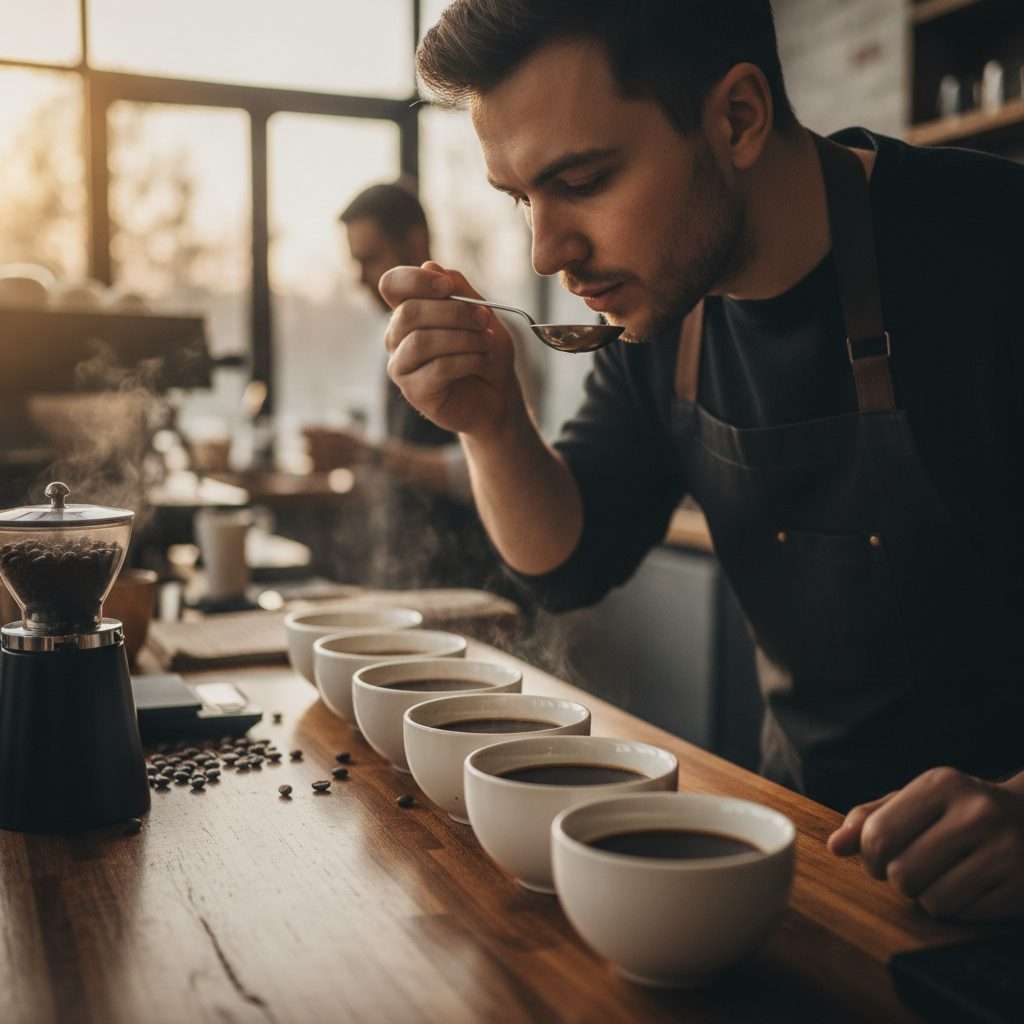
Trained, licensed tasters called Q graders evaluate a coffee through a structured tasting ritual known as cupping. They score it on a 100-point scale, judging things like aroma, flavor, acidity, body, sweetness, and how clean it tastes. A coffee that scores 80 points or higher earns the title “specialty.” Below 80, it’s commodity-grade, the everyday stuff that gets blended, dark-roasted, and shipped by the ton.
The term “specialty coffee” was coined back in 1974, but that 80-point threshold came later, formalized through the SCA’s cupping protocols (the 100-point form dates to 2004). The score tiers break down like this:
- 80–84.99 — Very Good. Solid, clean, the floor of specialty.
- 85–89.99 — Excellent. The sweet spot for most great roasters’ single origins.
- 90+ — Outstanding. Rare, expensive, the bottle-of-fancy-wine tier.
One update worth knowing, because it’s genuinely new: in November 2024, the Specialty Coffee Association adopted a fresh set of standards called the Coffee Value Assessment (CVA), replacing the old 2004 cupping form. The idea is to describe a coffee’s value with more nuance than a single number can capture. The 80-point concept still anchors how people talk about quality, but the industry is moving toward a richer picture than one lonely score.
Specialty vs. commodity coffee: what you’re actually comparing
The easiest way to feel the difference is to put them side by side. This isn’t snobbery, it’s two genuinely different products that happen to share a name.
| Specialty Coffee | Commodity Coffee | |
|---|---|---|
| Cupping score | 80+ on the 100-point scale | Below 80 (often ungraded) |
| Species | Almost always high-grown Arabica | Arabica, Robusta, or a blend |
| Traceability | Farm, region, and producer named | “Product of multiple origins” |
| Roast style | Roasted to show off origin flavor | Dark, uniform, built to last on a shelf |
| Defects | Strictly limited; carefully sorted | Higher tolerance for defects |
| Freshness | Roast date on the bag | Best-by date, often months out |
| Price | Roughly $16–$30 per 12 oz | Roughly $5–$10 per 12 oz |
The species line matters more than people realize. Specialty coffee leans almost entirely on Arabica grown at high altitude, where cooler temperatures slow the cherry’s development and concentrate sugars and acids. Commodity coffee often includes Robusta, which is hardier, cheaper, and more caffeinated but tastes flatter and more bitter. If you want the full breakdown, we get into it in Arabica vs. Robusta.
The third wave: how coffee got a backstory
You’ll hear “third wave” thrown around like everyone agreed on what it means. Quick history, because it actually clarifies a lot.
- First wave: coffee becomes a household staple. Think pre-ground cans and instant. Convenience over character.
- Second wave: the cafe era. Espresso drinks, lattes, and a certain green-aproned chain teach the world to order coffee by name.
- Third wave: beginning in the late 1990s and exploding through the 2000s and 2010s, coffee gets treated like an artisan product—traceable, single-origin, lightly roasted to highlight where it came from.
So is third wave the same as specialty? Close, but not identical. Specialty is the quality grade (the 80+ score). Third wave is the philosophy: source traceable green coffee, roast to reveal origin character instead of burying it, brew with precision, pay producers above commodity rates, and tell you the story. A coffee can be specialty-grade without being third wave, but third-wave roasters almost always use specialty beans. One is the bar; the other is the worldview.
Traceability and trade: why the bag name-drops a farm
That little phrase “single origin” is doing heavy lifting. Traceability means the roaster can tell you the country, region, farm or co-op, the producer’s name, the variety, the altitude, and how the cherry was processed. Commodity coffee can’t, because it’s blended from whoever sold green beans cheapest that season.
Traceability also ties into how the coffee was bought, and this is where two terms get confused constantly:
| Fair Trade | Direct Trade | |
|---|---|---|
| What it is | A formal certification | A set of values, not a certification |
| Who oversees it | Fairtrade International (FLO) | The roaster, directly |
| The relationship | Through co-ops and standards bodies | Roaster buys straight from the producer |
| The promise | Minimum price floor, ethical standards | Closer relationships, often higher pay for quality |
| The catch | Doesn’t guarantee cup quality | Unregulated, so “direct trade” can mean anything |
Fair trade is a certification with a price floor and ethical standards, overseen by a third party. Direct trade skips the middleman: the roaster buys straight from the grower, building a relationship and often paying more for higher quality. The honest caveat? Direct trade isn’t regulated, so it’s only as trustworthy as the roaster using it. The good ones will happily tell you exactly what they paid and to whom.
What to look for on a bag of specialty coffee
Flip the bag over. A genuine specialty bag practically writes you a love letter. Here’s your checklist:
- A roast date (not a best-by date). You want beans 5 to 21 days off roast for peak flavor. No roast date is a red flag.
- Origin details: country at minimum, ideally region, farm, and producer.
- Variety: Bourbon, Typica, Geisha, Caturra, and so on.
- Process: washed, natural, or honey. This shapes flavor more than most beginners expect.
- Altitude in meters above sea level (MASL). Higher usually means denser, more complex beans.
- Tasting notes: “blueberry, dark chocolate, brown sugar.” Not added flavors—flavors the coffee naturally has.
- Roast level: light, medium, or dark, which changes the cup dramatically. Our guide to roasts unpacks all three.
The more of these a bag tells you, the more confident the roaster is in the coffee. Vagueness is the tell. If it just says “100% Arabica, medium roast, rich and smooth,” you’re holding marketing, not specialty. For a deeper dive on choosing, see how to select the perfect beans.
Common beginner mistakes (gently, lovingly pointed out)
- Buying great beans, grinding them in a blade grinder. You just bought a steak and microwaved it. A burr grinder grinds evenly so extraction is even. It’s the single biggest upgrade you can make.
- Storing beans in the freezer door or a clear jar on the counter. Air, light, heat, and moisture are the enemies. Keep them airtight, cool, and dark. Here’s how to store beans properly.
- Eyeballing your coffee. Specialty coffee rewards precision. Use a proper coffee-to-water ratio—a great starting point is 1:16, meaning 1 gram of coffee to 16 grams of water (so 30 g coffee to 480 g water).
- Boiling water straight onto the grounds. Off-the-boil scorches delicate light roasts. Aim for 195–205°F (90–96°C).
Is specialty coffee worth it?
Let’s do the math, because “worth it” deserves numbers. A $20 bag of specialty coffee holds about 12 ounces, roughly 20 to 24 cups if you brew at that 1:16 ratio. That’s under a dollar a cup—less than half what your local cafe charges for a drink that’s often worse. Suddenly the fancy bag looks like the budget option.
Whether it’s worth it for you comes down to two things: do you taste the difference, and do you care about the story behind the cup? If you drink coffee with cream and three sugars to wake up, honestly, commodity coffee is fine and I won’t tell anyone. But if you drink it black, brew with a little care, and like knowing a real farmer got paid well for it, specialty is one of the cheapest luxuries on earth.
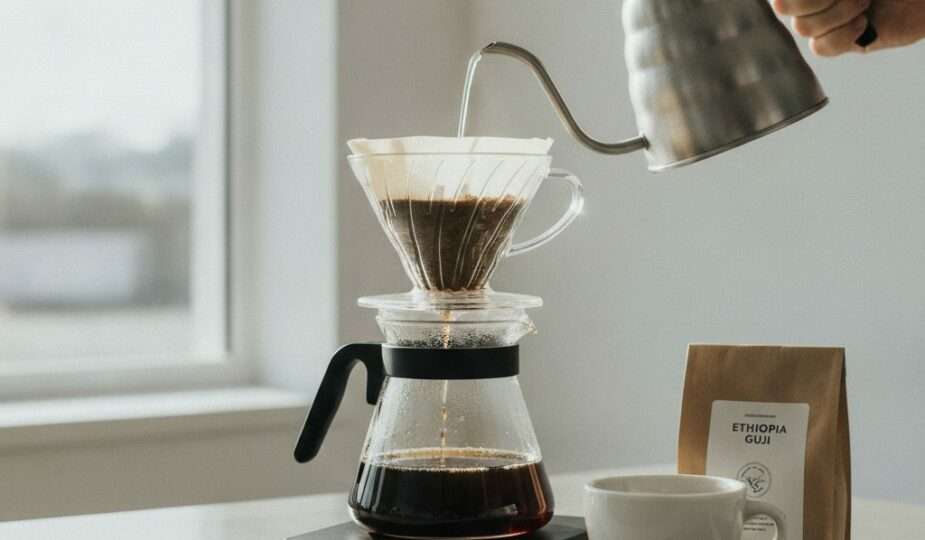
The catch: great beans can only do so much if your brewing is sloppy. Specialty coffee is an ingredient, not a magic trick. Pair it with a decent grinder, the right water temperature, and a method you enjoy—whether that’s a pour over or a forgiving French press—and that $20 bag will outperform anything you can order out.
Frequently Asked Questions
Does specialty coffee have more caffeine?
Not necessarily, and often slightly less. Specialty coffee is almost always Arabica, which has roughly half the caffeine of Robusta. The bigger caffeine variable is your brew method and dose, not the grade. If you want more punch, adjust your ratio rather than chasing “stronger” beans—here’s how to adjust strength.
Is specialty coffee the same as organic or fair trade?
No. Specialty refers strictly to quality (an 80+ cupping score). Organic and fair trade are certifications about how the coffee was farmed and traded. A coffee can be specialty without being certified organic, and plenty of fair trade coffee never scores 80. They overlap but measure totally different things.
Do I need an espresso machine to enjoy specialty coffee?
Absolutely not. Some of the best ways to taste origin character are simple manual brewers like a pour over or French press. That said, if espresso is your love language, specialty beans shine there too—start with our guide to making espresso at home.
Why does specialty coffee taste fruity or sour to me?
Two reasons. First, light-roasted specialty coffee preserves the bean’s natural acidity, which reads as bright and fruity once your palate adjusts from dark, roasty flavors. Second, real sourness usually means under-extraction—your grind is too coarse or your water too cool. Grind a touch finer and check that your water is in that 195–205°F window.
How long does specialty coffee stay fresh?
Whole beans taste their best from about 5 to 21 days after roasting and stay good for a month or two if stored airtight, cool, and dark. Once ground, the clock speeds up dramatically—flavor fades within 30 minutes or so. Grind right before you brew and your future self will thank you.
So there it is. Specialty coffee isn’t a secret club with a velvet rope—it’s just coffee that someone took seriously from the farm to your cup, and now you can prove it from the bag alone. Buy the good beans, grind them fresh, mind your water, and let the rest be a happy little adventure. Your morning’s about to get a whole lot more interesting.