Good vs Bad Coffee: Recognizing the Difference
You already know the difference between good and bad coffee. You feel it at 7 a.m., in that first sip � the one that either makes your shoulders drop or makes you wince and reach for sugar to bury the sins. The trick isn’t tasting the difference. It’s knowing why the bad cup went wrong so you can stop making it.
So let’s settle this. Good coffee isn’t luck, and it isn’t reserved for people with $700 espresso machines and a barista certificate. It comes down to a handful of things you can actually control � the beans, the roast, the freshness, and how you brew. Get those right and even a $15 bag from the grocery store will outclass the fancy stuff your friend ruined in their drip machine. Let’s go.
Why Your Bad Cup Is Bad (And Why It’s Fixable)
Here’s the thing nobody tells you: most “bad coffee” isn’t bad coffee at all. It’s decent coffee that got mishandled somewhere between the farm and your mug. Stale beans, a scorched roast, water that’s too hot, a grind that’s all wrong � any one of these can take a perfectly good bean and turn your morning into a chore.
The good news? Every single one of those is a knob you can turn. Once you know what separates the great cup from the sad one, you stop being at the mercy of your coffee and start being the boss of it. Quick map of what actually matters, roughly in order:
- Freshness � the single biggest lever, and the one most people ignore
- Bean quality and sourcing � you can’t brew flavor that was never there
- Roast � the make-or-break translation of bean into flavor
- Grind � wrong size sabotages everything downstream
- Brew variables � ratio, water temp, and time, the holy trinity
We’ll take them one at a time. Grab your mug.
The Bean Comes First � You Can’t Fake It
You cannot brew flavor that isn’t in the bean. Period. Good coffee starts with arabica grown at altitude, picked ripe, and processed with care. Cheap, mass-market coffee leans on robusta and over-mechanized harvesting that scoops up underripe and overripe cherries together � and you taste that mess in the cup as flat, rubbery bitterness.
What to look for when you’re choosing your beans:
- A single origin or a named region on the bag (Ethiopia, Colombia, Guatemala) instead of the vague “100% premium blend.” Specificity is a good sign someone cared.
- The word “arabica,” not robusta � unless you’re after that punchy robusta kick for espresso, which is a different conversation.
- Tasting notes that mean something. “Notes of blueberry and brown sugar” tells you the roaster actually cupped it. “Bold and smooth” tells you the marketing team wrote it.
Curious where your favorite cup comes from? The flavor map of the world is real � start with our rundown of the top coffee-producing countries and you’ll start tasting geography in every sip.
The Roast: Where Good Beans Live or Die
A great roaster takes a good green bean and coaxes out everything it’s hiding � the sweetness, the acidity, the aromatics. A careless one torches it. Over-roasted coffee is the number one reason a cup tastes “burnt,” and a lot of big-name dark roasts lean that way on purpose, because charred flavor is consistent and cheap to fake. If your coffee tastes like an ashtray, it’s not your brewing � it’s the roast.
A cheat sheet for reading a roast before you commit:
- Light roast: brighter, more acidic, more of the bean’s original character. Best for pour-over and showing off a special single-origin bean.
- Medium roast: the crowd-pleaser. Balanced sweetness and body, plays nice with almost any brew method.
- Dark roast: bold, smoky, low-acid. Great when it’s done with intention � a disaster when it’s just hiding cheap beans under char.
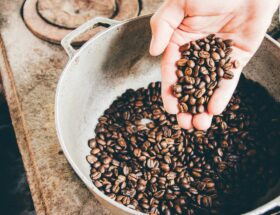
- The oil tell: a light sheen on dark-roast beans is normal. Beans that look greasy and wet, or smell sharp and acrid through the bag, have been pushed too far or have gone stale.
Freshness Is Non-Negotiable
If you take one thing from this whole article, take this: coffee is a fresh food, and it goes stale. The moment beans are roasted, they start releasing CO2 and shedding the aromatic oils that make coffee taste like anything. That pre-ground tub that’s been open on your counter since the Obama administration? That’s not coffee anymore. That’s beige water waiting to happen.
Here’s the freshness playbook, no negotiating:
- Buy whole bean, grind right before you brew. Ground coffee loses its best aromatics within minutes. Whole beans hold them for weeks. This one swap will do more for your cup than any gadget.
- Look for a roast date, not a “best by” date. Aim to drink beans within about 2 to 4 weeks of roasting for peak flavor. A bag with no roast date is hiding something.
- Rest fresh beans 3 to 7 days after roasting. Coffee that was roasted yesterday is actually too gassy and will brew sour and uneven. Let it settle.
- Store it right: airtight container, cool, dark, away from the stove. Skip the fridge (moisture and odors) and skip the freezer for your everyday bag � just buy what you’ll drink in a few weeks. One of the best coffee storage containers will keep oxygen and light off your beans far better than the bag they came in.
Grind Size: The Quiet Saboteur
This is the step people skip, and it’s the step that quietly ruins more cups than anything else. Grind too fine for your method and you over-extract � hello, harsh bitterness. Grind too coarse and you under-extract � hello, sour, thin, “why does this taste like nothing” water. Same beans, wildly different cup, just from the grind.
Match the grind to the method:
- French press: coarse, like sea salt.
- Drip / pour-over: medium, like table sand.
- Espresso: fine, like powdered sugar.
And do yourself a favor: a burr grinder beats those spinning-blade choppers every time. Blade grinders produce a chaotic mix of dust and boulders, which means part of your coffee over-extracts while the rest under-extracts � bitter and sour in the same cup. A burr grinder gives you uniform particles, which is the whole game � our roundup of the best coffee grinders covers options for every budget. If your cup keeps coming out watery or weak, your grind is usually the first suspect.
Brewing: Nail the Holy Trinity
You can buy perfect beans and still botch the finish line. Brewing is where ratio, water temperature, and time either come together or fall apart. The good news is these are three of the most controllable numbers in your whole kitchen.
- Ratio: start at roughly 1 gram of coffee to 16�17 grams of water (about 2 tablespoons of grounds per 6 oz cup). Too weak? Use more coffee � don’t just brew longer, that only adds bitterness. A cheap kitchen scale is the single best brewing upgrade most people never make � any of the best coffee scales will take the guesswork out of your ratio.
- Water temperature: 195�205�F (90�96�C). Boiling water (212�F) scorches the grounds and turns it bitter. No thermometer? Boil, then let it sit off the heat for about 30 seconds.
- Time: match it to the method � pour-over around 3 to 4 minutes, French press a clean 4 minutes (then plunge, and pour it ALL out so it stops brewing). If you’d rather a machine handle the timing for you, one of the best drip coffee makers nails a consistent pour-over-style brew every morning.
- Water itself: coffee is ~98% water, so if your tap tastes off, your coffee will too. Filtered water makes a real, tasteable difference.
And keep your gear clean. Old coffee oils go rancid and turn every fresh batch faintly bitter, so wash your equipment and descale your machine regularly. If you’re shopping, our guides to the best coffee makers and the most useful brewing equipment and gadgets will steer you toward gear that earns its counter space.
Train Your Palate (Your “Good” Is Allowed to Be Yours)
Now for the fun part � and the permission slip. “Good coffee” isn’t one fixed flavor handed down from on high. Maybe you love a bright, fruity Ethiopian that tastes like blueberry. Maybe you want a chocolatey, low-acid cup that hugs you back. Both are right. The goal isn’t to chase someone else’s tasting notes � it’s to figure out yours.
How to actually develop your palate:
- Taste deliberately. Once a week, slow down and notice: Is it bright or mellow? Fruity, nutty, chocolatey? Where does it sit on your tongue?
- Change one thing at a time. New origin this week, new roast level next. If you swap everything at once, you’ll never know what you actually liked.
- Keep a two-line note on bags you love. Future you will thank present you at the coffee shop.
Good vs. Bad Coffee: The Cheat Sheet
Short on time? Here’s the whole article in a glance:
- Good coffee: fresh roast date, whole bean ground at home, named origin, balanced roast, brewed at 195�205�F with a 1:16-ish ratio, and a clean machine.
- Bad coffee: stale pre-ground tub, no roast date, scorched dark roast, blade-grinder dust, boiling water, and gear caked in old oils.
- Biggest bang for your buck: buy whole bean, get a burr grinder, and a kitchen scale. That trio fixes most sad cups overnight.
Frequently Asked Questions: Good vs. Bad Coffee
How do I spot good coffee?
You’ll know it by these signs � and most of them you can check before you even brew:
- A strong, inviting aroma the moment you open the bag
- A visible roast date within the last few weeks
- Flavor with depth and complexity, not just “strong”
- A smooth, balanced finish � sweetness and a little brightness, no harsh aftertaste
- Whole beans you grind fresh and brew with care
How can I tell if my coffee has gone bad?
Your senses will tell you before your first sip ruins your morning. Watch for:
- A flat, stale, or cardboard-y smell (or no smell at all)
- A bland, bitter, or sharply sour taste
- Over-extracted (harsh) or under-extracted (thin, sour) flavors � usually a grind or brew issue
- No roast date, or a roast date months in the past
- Beans that look greasy, dull, or oddly wet
If yours keeps coming out weak or hollow, we walk through the fixes in why your coffee tastes watery.
What actually affects how coffee tastes?
In rough order of impact:
- Freshness (roast date and grinding right before brewing)
- Bean quality and origin
- Roast level
- Grind size and consistency
- Water quality and temperature
- Brew method, ratio, and time
What’s the fastest way to make my coffee better?
Start here, in this order � each one is a noticeable upgrade:
- Buy whole beans with a recent roast date and grind them fresh
- Get a burr grinder (the biggest single jump in quality)
- Weigh your coffee � aim for a 1:16 to 1:17 coffee-to-water ratio
- Use filtered water at 195�205�F, never boiling
- Store beans airtight, cool, and dark � and keep your gear clean
Is specialty coffee worth the extra money?
For most people, yes � and not for snob reasons. Specialty coffee is graded higher, sourced more transparently, and roasted with intention, which usually means a roast date, real tasting notes, and a cup with actual character. You’re also often supporting smaller producers and fairer supply chains. That said, a fresh, mid-priced bag you grind and brew well will beat an expensive bag you let go stale every single time. Freshness and technique punch above price.
The Last Sip
Good coffee was never some secret club with a velvet rope. It’s fresh beans, a roast that respects them, the right grind, and water that behaves. Master those four and you’ll quietly out-brew half the caf�s in town from your own kitchen � in your pajamas, no certificate required.
So tomorrow morning, change one thing. Grind fresh. Check the roast date. Pull the kettle off the boil. Then take that first sip and feel your shoulders drop � that’s the good stuff, and now you know exactly how you made it happen.
Now go pour yourself something worth waking up for. Got a trick that turned your coffee around? Drop it in the comments � somebody out there needs to read it. Cheers to better mornings.