Are Coffee Pods Recyclable? What You Need to Know
You finish your morning espresso, pop the spent pod out of the machine, and hover over the trash can with a tiny flicker of guilt. We’ve all been there. That little capsule felt so convenient thirty seconds ago, and now it feels like a tiny environmental crime scene in the palm of your hand. So let’s settle this once and for all: are coffee pods recyclable, and which ones actually live up to the green halo on the box?
Short answer: some are, some aren’t, and a few are lying to you. Stick with me and you’ll walk away knowing exactly what your pods are made of, how to recycle the ones that can be, what “compostable” really requires (spoiler: probably not your backyard), and the one swap that sidesteps the whole mess. No lectures, no guilt trips. Just the goods.
First, Know What Your Pod Is Actually Made Of
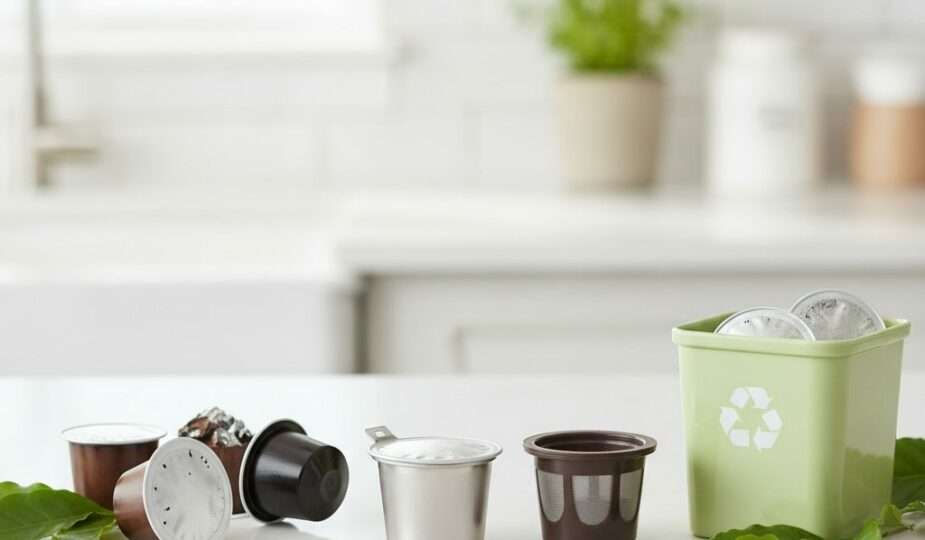
Not all pods are created equal, and the material is the whole ballgame here. Before you can recycle anything, you need to flip the box over and figure out which camp your capsule falls into. There are three main types, and they behave very differently once you’re done with them.
Aluminum pods
These are your Nespresso Original and Vertuo capsules, plus a handful of premium competitors. Aluminum is genuinely one of the most recyclable materials on the planet, and it can be melted down and reused over and over without losing quality. The catch? You usually can’t just toss them in your curbside bin (more on that disappointment in a second).
Plastic pods
Most K-Cup-style pods are made from polypropylene (resin code #5). On paper, #5 plastic is recyclable. In practice, the pods are small, often still full of wet grounds, and topped with a foil lid and a paper filter glued inside. That combination makes them a nightmare for sorting machines, which is why so many get rejected even when you do everything right.
Compostable pods
The newest darling of the pod world. These are made from plant-based materials designed to break down rather than be recycled. They sound like the obvious win, but “compostable” comes with serious fine print that trips up almost everyone. We’ll get into it.
Aluminum Pods: Recyclable, But Only Through the Program
Here’s the part people miss. Your local recycling facility almost certainly won’t take loose aluminum pods. They’re too small to be captured by standard sorting equipment, and they’re full of coffee grounds. So while the metal itself is infinitely recyclable, your curbside bin is a dead end.
The fix is a dedicated take-back program. Nespresso runs the biggest one, and it’s free. Here’s how it works:
- Order a complimentary recycling bag (one comes with every order placed on Nespresso’s website), or grab one at a boutique.
- Fill it with used capsules. A standard bag holds roughly 200 Original capsules or about 100 of the larger Vertuo pods.
- Drop it off at one of the tens of thousands of UPS locations, hand it to your postal carrier when your next order arrives, or leave it at a Nespresso boutique or partner store.
- From there, a recycling partner separates the grounds from the aluminum. The metal gets melted and reused; the grounds get composted into soil.
The honest caveat: this only works if you actually do it. Studies and recovery rates consistently show that the convenience of pods works against the program, because the easiest move is always the trash can. If you buy aluminum pods and never mail a single bag back, you’re effectively buying single-use metal. The system is good. Your follow-through has to match.
Plastic Pods: Technically Yes, Realistically Iffy
Brands love to stamp “recyclable” on plastic pods, and it’s not technically a lie. But the gap between “recyclable” and “actually recycled” is where most of these end up in a landfill anyway. To give a #5 plastic pod a fighting chance, you have to prep it, and almost nobody does.
- Peel off the foil lid. It’s a different material and contaminates the plastic stream.
- Dump and scoop out the wet grounds. Compost them or toss them; just get them out.
- Remove the paper filter if it’s glued in there.
- Check whether your municipality even accepts #5 plastic in your bin, because plenty don’t.
Even after all that, the pods are often too small to be sorted and slip through the cracks at the facility. The blunt truth is that plastic pods are the weakest performer of the bunch. If recyclability matters to you, this is the format to move away from.
“Compostable” Pods: Read the Fine Print Before You Trust It
This is the one that catches good-hearted people off guard. There are two very different kinds of composting, and the word on the box rarely tells you which one applies.
Most “compostable” pods are industrially compostable, meaning they’re certified to break down under the conditions of a commercial composting facility, not your garden. The benchmark here is the ASTM D6400 standard, which requires at least 90% biodegradation within 180 days. The BPI certification you’ll see on packaging confirms the material disintegrates (90% passing through a 2mm screen) within about 84 days under those managed conditions, where temperatures run around 58°C (136°F) with controlled moisture and oxygen.
Your backyard pile does not hit those numbers. A home compost bin typically sits around 20 to 30°C, which is nowhere near hot enough. Toss an ASTM D6400 pod onto your garden heap and it may still be sitting there, fully intact, a year later. Sad, but true.
So before you trust a compostable claim, do two quick checks:
- Look for real certification. BPI or TÜV Austria are the names to trust. “Compostable” with no certification logo is the packaging equivalent of a wink and a shrug.
- Find out if your city offers industrial composting collection. Many don’t. If yours doesn’t, that “compostable” pod heads to the landfill just like a regular one, where it breaks down poorly and slowly. Look for “home compostable” specifically if you want to use your own bin.
The Greenest Move: A Reusable Pod
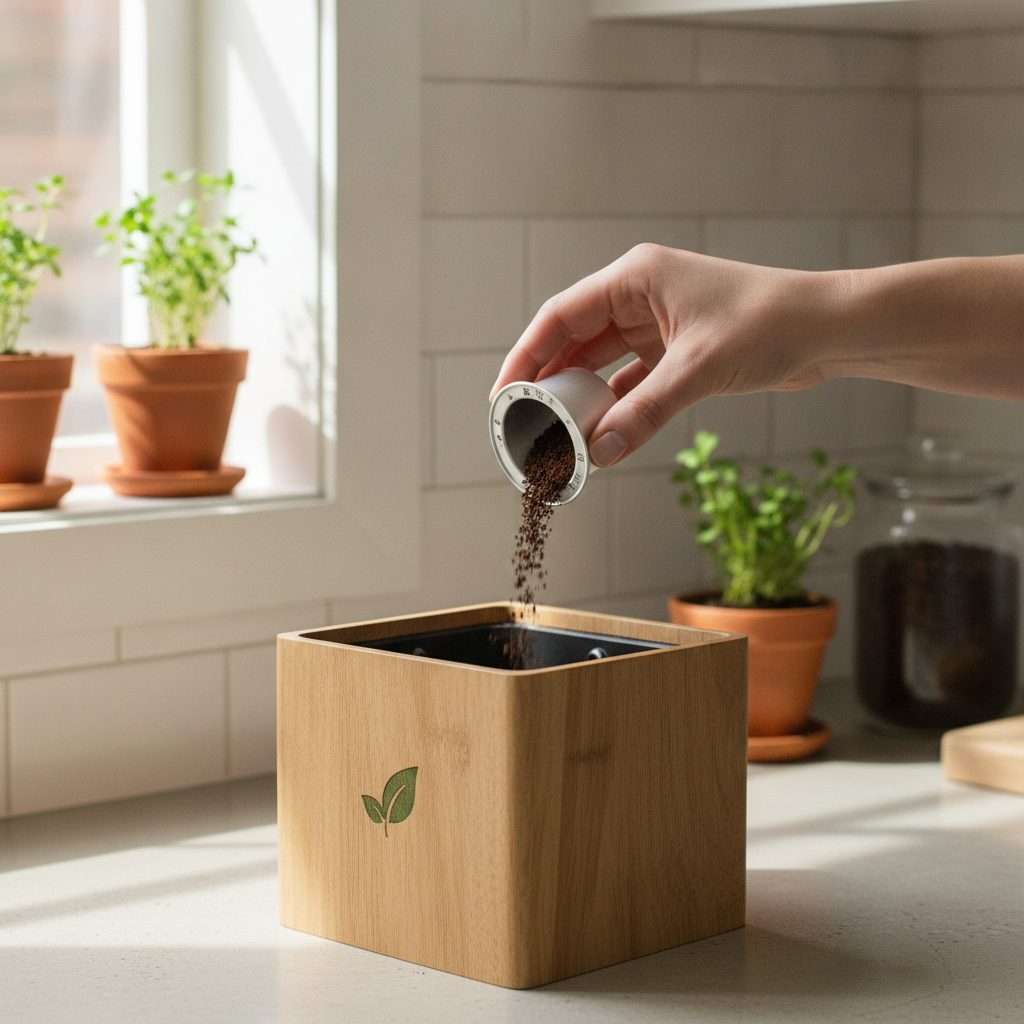
Want to skip the whole recyclable-or-not debate? Get a reusable pod. These are little stainless steel or BPA-free plastic refillable capsules that fit most popular machines. You scoop in your own ground coffee, brew, rinse, and repeat. One pod, used for years, no bag to mail and no certification to decode.
The bonus you didn’t expect: better coffee and a fatter wallet. You get to use freshly ground beans instead of whatever’s been sitting sealed in a capsule for months, which means you can dial in exactly what you like. If you’re going this route, it’s worth getting a solid burr grinder for a consistent grind, and learning how to adjust coffee strength so each cup hits the way you want. Keep those beans fresh in a proper airtight container and you’ll genuinely taste the upgrade over a sealed factory pod.
And if the reusable pod gets you curious about ditching the machine entirely, there’s a whole world waiting. A pour over or a French press produces zero pod waste and arguably a better cup. Just saying.
Quick Reference: Which Pod Does What
- Aluminum: Recyclable, but only through a take-back program like Nespresso’s. Not curbside. Excellent material if you actually return them.
- Plastic (#5): Technically recyclable, realistically rejected. Needs full disassembly and a city that accepts #5. Weakest option.
- Compostable: Usually industrial-only. Needs certification (BPI/TÜV) and access to commercial composting. Useless in most backyards.
- Reusable: The cleanest answer. No recycling, no composting, no guilt. Just rinse and reuse.
Frequently Asked Questions
Can I put coffee pods in my curbside recycling bin?
Almost never, at least not as-is. Most pods are too small for sorting equipment and contaminated with wet grounds. Aluminum pods need a dedicated take-back program, and plastic pods need full disassembly plus a municipality that accepts #5 plastic. When in doubt, check your local recycling rules rather than wishfully tossing them in.
Are Nespresso pods actually recycled or is it just marketing?
The program is real and the aluminum genuinely gets recovered, with grounds composted separately. The weak link is participation. If you fill and return the free bags, your pods get recycled. If you trash them, none of that infrastructure helps. It works exactly as well as you make it work.
Can I compost “compostable” pods in my backyard?
Usually not. Most are certified industrially compostable under ASTM D6400, which needs facility temperatures around 58°C that your home pile (typically 20 to 30°C) won’t reach. Look specifically for “home compostable” certification if you want to use your own bin, otherwise route them to a commercial composting program.
Do reusable pods make worse coffee?
Done right, they make better coffee, because you control the grind, the dose, and the freshness. A pre-filled pod uses coffee sealed months ago. With a reusable pod and freshly ground beans, you can tune strength and flavor to taste. The only real trade is a few extra seconds of scooping and rinsing.
What’s the most eco-friendly pod option overall?
A reusable refillable pod, hands down. It eliminates single-use waste entirely, no recycling logistics or composting access required. If you prefer single-use, aluminum is the strongest choice, but only if you commit to the take-back program every single time.
So there you have it, no guilt required. Whether you stay loyal to your pod machine or graduate to a reusable capsule, you now know exactly what happens after that last sip. Make the swap that fits your life, recycle the right way, and enjoy your coffee with a clear conscience. That’s the whole point, isn’t it? You’ve earned it.