Espresso vs Coffee: What’s Actually the Difference?
On this page
- The Short Answer: It’s the Brewing Method, Not the Bean
- Espresso vs Coffee: The Side-by-Side Breakdown
- Pressure: The One Thing That Changes Everything
- Grind, Ratio, and Tamp: Why Espresso Is So Picky
- The Caffeine Myth: Per Shot vs Per Sip
- Busting the “Espresso Bean” Myth Once and for All
- Drinks Built on Each
- Common Mistakes That Blur the Line
- Frequently Asked Questions
Espresso isn’t a bean. It’s not a roast, it’s not a plant, and it’s definitely not some elite coffee cousin that grew up fancier than the stuff in your kitchen. Espresso is a method — a way of forcing hot water through coffee under serious pressure. That’s it. Same beans you’ve been brewing all along, just put through a much more intense workout.
So if you’ve ever stood at a cafe counter quietly wondering whether espresso and coffee are different things or the same thing wearing different outfits, you’re about to get the clearest answer on the internet. We’ll cover the actual mechanics — pressure, grind, ratio, temperature — plus how caffeine really stacks up (the per-serving versus per-milliliter twist trips up almost everyone), what crema is, and which drinks are built on each. By the end you’ll never get fooled by an “espresso bean” label again.
The Short Answer: It’s the Brewing Method, Not the Bean
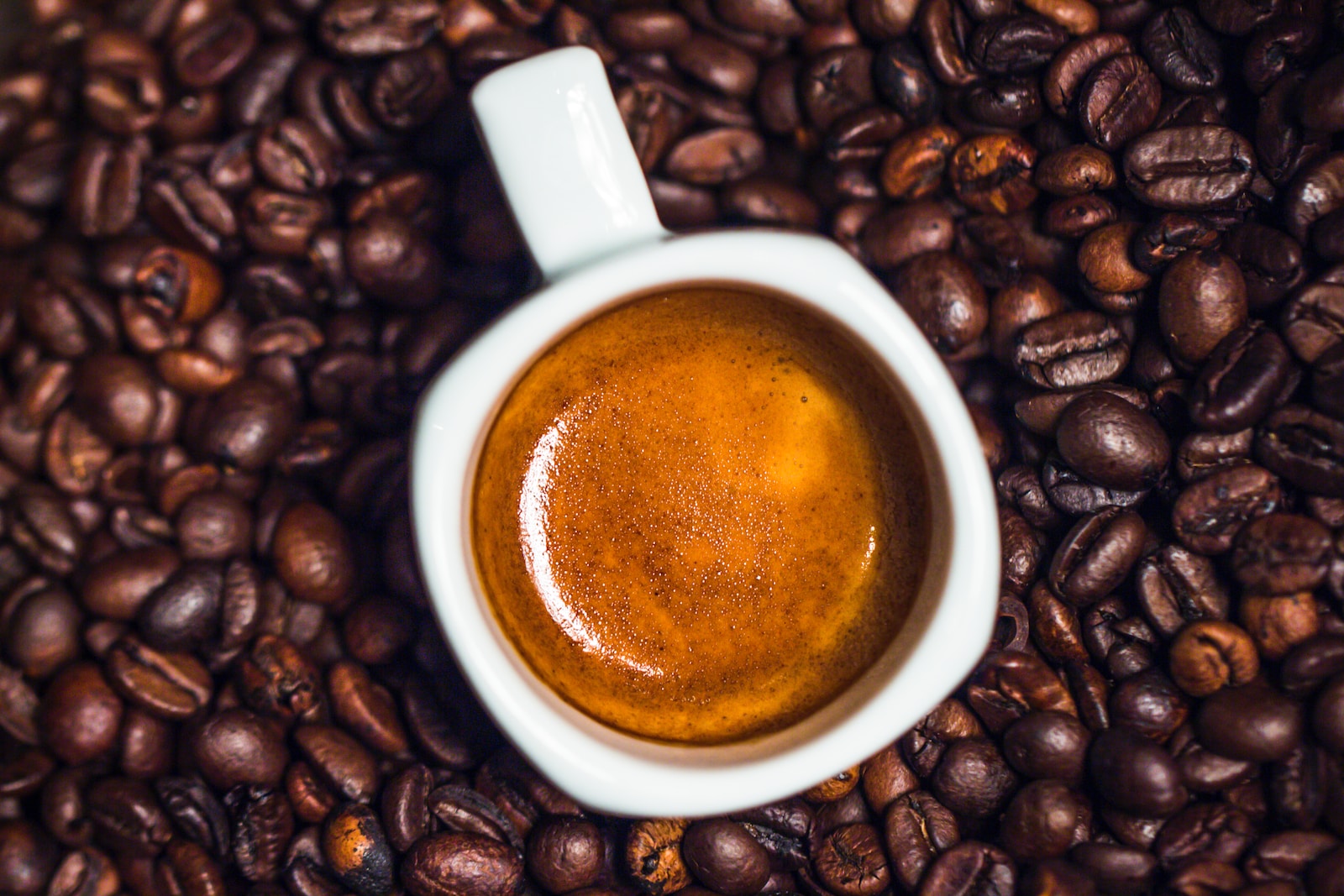
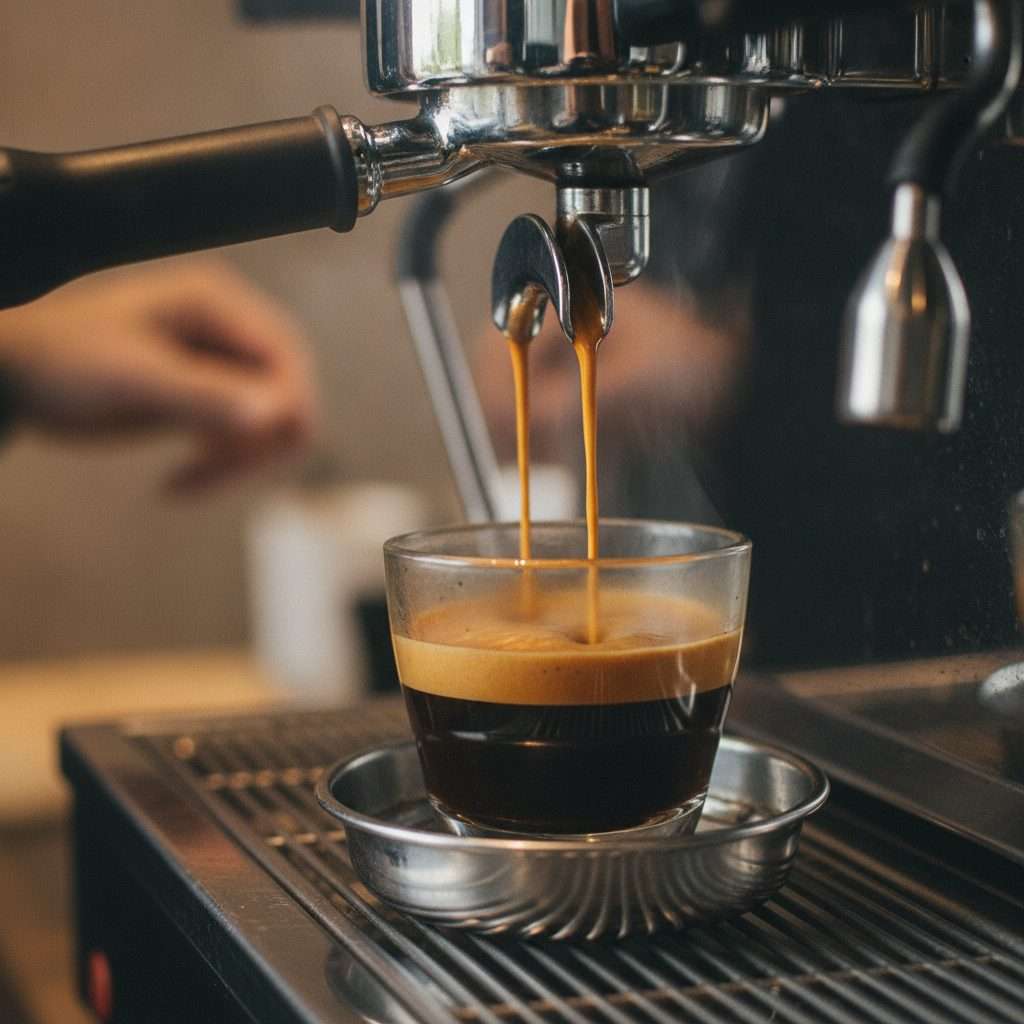
Espresso is a brewing technique that pushes near-boiling water through finely ground, tightly packed coffee at around 9 bars of pressure — that’s nine times the atmospheric pressure at sea level. The result is a small, intense, syrupy shot topped with a layer of golden-brown foam. “Coffee,” when people say it casually, usually means the gravity-fed stuff: drip, pour over, French press. Hot water meets grounds, gravity does the work, no pressure required.
Same plant. Same cherries. Often the literal same bag of beans. The difference lives entirely in how you extract the coffee from the grounds. Pressure is the whole story, and once that clicks, everything else makes sense.
Espresso vs Coffee: The Side-by-Side Breakdown
Let’s put them in a ring together. Here’s how a classic espresso shot compares to a standard cup of drip or pour over coffee across the variables that actually matter.
| Factor | Espresso | Drip / Pour Over Coffee |
|---|---|---|
| Pressure | ~9 bars (forced) | None (gravity only) |
| Grind size | Fine, like powdered sugar | Medium to medium-coarse |
| Coffee-to-water ratio | ~1:2 (18g in, 36g out) | ~1:15 to 1:17 |
| Water temperature | 90–96°C (195–205°F) | 90–96°C (195–205°F) |
| Brew time | 25–35 seconds | 2–4+ minutes |
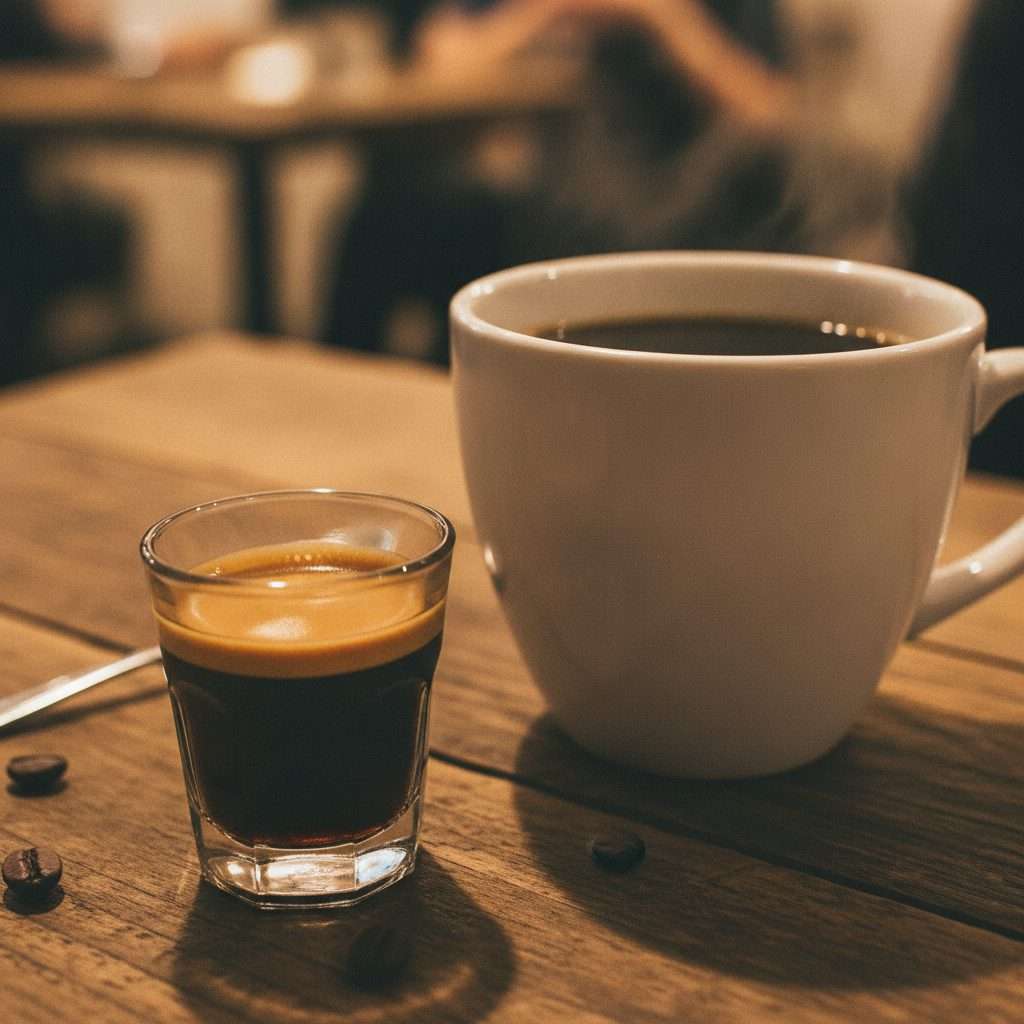
| Serving size | ~30 ml single / 60 ml double | ~240 ml (8 oz) cup |
| Body | Thick, syrupy, crema on top | Lighter, cleaner, tea-like to round |
| Caffeine per serving | ~63 mg (single) / ~125 mg (double) | ~95 mg (8 oz cup) |
| Caffeine per ml | ~2.1 mg/ml (concentrated) | ~0.4 mg/ml (diluted) |
Notice the water temperature is identical. People assume espresso runs hotter — it doesn’t. The drama is all in the pressure and the speed.
Pressure: The One Thing That Changes Everything
This is the headliner, so let’s give it the spotlight. In drip and pour over, water trickles through the grounds at normal atmospheric pressure and takes its sweet time. In espresso, a pump forces water through a dense puck at roughly 9 bars in under 30 seconds.
That pressure does two magical things. First, it extracts more dissolved solids and oils fast, which is why espresso tastes so concentrated and bold. Second, it emulsifies oils and forces carbon dioxide out of the coffee, creating crema — that tan, slightly foamy cap floating on a fresh shot. You cannot make real crema with gravity. It’s the visual fingerprint of pressure extraction.
Why 9 bars specifically? It’s the sweet spot. Below it, shots run watery and sour with thin crema. Push too far above it and you risk channeling — water blasting through cracks in the puck — which gives you bitter, uneven extraction. If you want to geek out on the technique side, our guide to making espresso at home walks through the whole pull.
Grind, Ratio, and Tamp: Why Espresso Is So Picky
Because espresso happens so fast and under so much pressure, it’s far less forgiving than a drip cup. Three variables make or break it.
- Grind size. Espresso needs a fine, even grind — think powdered-sugar territory — to create enough resistance for the pressure to build. Drip coffee uses a medium grind; go that coarse on espresso and water gushes through in five seconds flat. A consistent quality grinder matters more here than anywhere else in coffee, and our grind size chart shows exactly where each method lands.
- Ratio. Espresso runs tight — about 1:2, meaning 18 grams of coffee yields roughly 36 grams of liquid. Drip and pour over use a much looser 1:15 to 1:17. That alone explains the concentration gap. Dialing the broader coffee-to-water ratio is the fastest way to fix a brew that tastes off.
- Tamp. Espresso grounds get compressed into a level puck with about 30 pounds of force so water meets even resistance. Pour over and drip skip this entirely. Get the technique down with our breakdown of how to tamp espresso.
Drip and pour over coffee, by comparison, will tolerate a sloppy grind and an eyeballed scoop and still hand you a perfectly drinkable cup. That forgiveness is exactly why most people start there.
The Caffeine Myth: Per Shot vs Per Sip
Time to settle the bar argument. “Espresso has way more caffeine!” Well… yes and no, and the truth is sneakier than either side thinks.
Per milliliter, espresso wins by a mile. A shot packs roughly 2.1 mg of caffeine per ml. Drip coffee carries about 0.4 mg per ml. Ounce for ounce, espresso is dramatically more concentrated.
Per serving, drip often pulls ahead. A single shot of espresso has about 63 mg of caffeine. A standard 8 oz cup of drip coffee has around 95 mg. So your big morning mug is likely delivering more total caffeine than one espresso shot — it’s just spread across a lot more liquid that you sip slowly. A double shot lands around 120–130 mg, which finally edges past the drip cup.
The takeaway: espresso feels stronger because it hits concentrated and fast, but a single shot isn’t the caffeine bomb people imagine. Bean choice nudges this too — robusta carries nearly double the caffeine of arabica, as we cover in arabica vs robusta.
Busting the “Espresso Bean” Myth Once and for All
Walk down the coffee aisle and you’ll see bags stamped “espresso roast” or “espresso beans,” and your brain quietly files espresso away as a special variety. Drop that idea right now.
There is no espresso plant. “Espresso roast” simply means the roaster took the beans darker and chose them with espresso brewing in mind — often a roast profile that tastes balanced under pressure and plays nicely with milk. But you can absolutely pull a beautiful shot from a light-roasted single origin, and you can brew a fantastic pour over with beans labeled “espresso.” The label is a serving suggestion, not a law.
What actually changes the cup is roast level, freshness, and origin — not a magic espresso gene. If you want to understand how roast shapes flavor, our guide to light, medium, and dark roasts is the place to start. Buy beans you love, then choose your brewing method based on the experience you want.
Drinks Built on Each
Here’s where the two paths really branch. Espresso is a base ingredient; brewed coffee is usually the finished drink.
Built on espresso
- Latte — espresso plus lots of steamed milk and a thin foam cap.
- Cappuccino — espresso with equal parts steamed milk and thick foam.
- Americano — espresso diluted with hot water, the shot’s nod to drip coffee.
- Macchiato — espresso “stained” with just a dab of foamed milk.
- Flat white — espresso with velvety microfoam, milk-forward but tighter than a latte.
Built on brewed coffee
- Drip / batch brew — the diner-mug classic, made by the pot.
- Pour over — hand-poured for a clean, bright, nuanced cup (here’s how to make the perfect pour over).
- French press — full immersion for a heavy, rich body, covered in our French press guide.
- Cold brew — coarse grounds steeped cold for 12+ hours, smooth and low-acid.
Common Mistakes That Blur the Line
- Using espresso grind in a drip machine. Too fine for gravity brewing — you’ll get bitter, over-extracted, sometimes muddy coffee.
- Using drip grind in an espresso machine. Too coarse to build pressure, so water rushes through and you get a sour, watery, crema-less shot.
- Skipping the scale. Espresso’s tight 1:2 ratio leaves no room to wing it. A set of good coffee scales earns its keep instantly.
- Blaming the beans. Nine times out of ten a bad shot is grind or tamp, not the coffee. Dial in your espresso grind before you swap bags.
Frequently Asked Questions
Is espresso just strong coffee?
Not exactly. Espresso tastes strong because it’s highly concentrated — a tight ratio and pressure extraction packed into a tiny serving. But “strong” usually means flavor intensity, not caffeine. A single shot can actually have less total caffeine than a full cup of drip coffee.
Can I make espresso without an espresso machine?
You can make something close. A stovetop Moka pot uses pressure (around 1–2 bars, far below a real machine’s 9) for a bold, espresso-ish brew, and an AeroPress can mimic the concentration. But true crema-topped espresso needs the full pressure only a proper machine or quality manual lever delivers.
Why does espresso have foam and drip coffee doesn’t?
That foam is crema, created when 9 bars of pressure emulsify the coffee’s oils and force out dissolved carbon dioxide. Gravity-brewed coffee never reaches the pressure needed to whip up that layer, so it stays flat on top.
Do I need special beans for espresso?
No. “Espresso beans” are just regular coffee beans, usually roasted darker and chosen to taste good under pressure. Any bean can be pulled as espresso or brewed as drip — it’s all about how you grind and extract it. Pick beans by roast and freshness using our guide to selecting the perfect coffee beans.
Does espresso use hotter water than drip coffee?
Surprisingly, no. Both brew best at roughly 90–96°C (195–205°F). The defining difference is pressure and brew time, not temperature.
So the next time someone insists espresso is a different bean, you can smile, sip your double shot, and let them in on the secret: it was the same coffee all along — it just hit the gym. Whichever method you reach for tomorrow morning, you now know exactly what’s happening in the cup.