On this page
Short answer: per cup, a large cold brew or a large mug of drip coffee usually carries the most caffeine. Per ounce, espresso wins by a long way. And if you want more caffeine from whatever you brew, the bean matters more than the method: Robusta has roughly twice the caffeine of Arabica.
The numbers below are typical figures, not guarantees. Caffeine shifts with the bean, the dose, the grind and how long the water sits with the coffee, so treat them as ranges.
Caffeine by coffee type
| Drink | Typical serving | Caffeine per serving | Caffeine per ounce |
|---|---|---|---|
| Espresso (single shot) | 1 oz | about 63 mg | about 63 mg |
| Espresso (double shot) | 2 oz | about 125 mg | about 63 mg |
| Drip / filter coffee | 8 oz | about 95 mg (80–120 mg) | about 12 mg |
| Cold brew (ready to drink) | 16 oz | about 150–250 mg | about 10–16 mg |
| Americano | 12 oz | same as the shots in it: 63–125 mg | 5–10 mg |
| Latte or cappuccino | 12 oz | same as the shots in it: 63–125 mg | 5–10 mg |
| Instant coffee | 8 oz | about 60 mg (30–90 mg) | about 8 mg |
| Decaf | 8 oz | about 2–15 mg | under 2 mg |
Per cup: cold brew and big drip coffees lead
Cold brew steeps coarse grounds in cold water for 12–24 hours, usually at a much higher coffee-to-water ratio than hot coffee. The concentrate is strong, so what you actually drink depends on how much it is diluted. A 16 oz coffee-shop cold brew commonly lands around 200 mg, more than a single 8 oz drip coffee. Home cold brew made from undiluted concentrate can go well past that.
Drip coffee catches up fast on size. An 8 oz cup is about 95 mg, but most mugs hold 12–16 oz, which puts you at 140–190 mg. A large coffee-shop drip can match or beat a cold brew of the same size.
Per ounce: espresso, by a long way
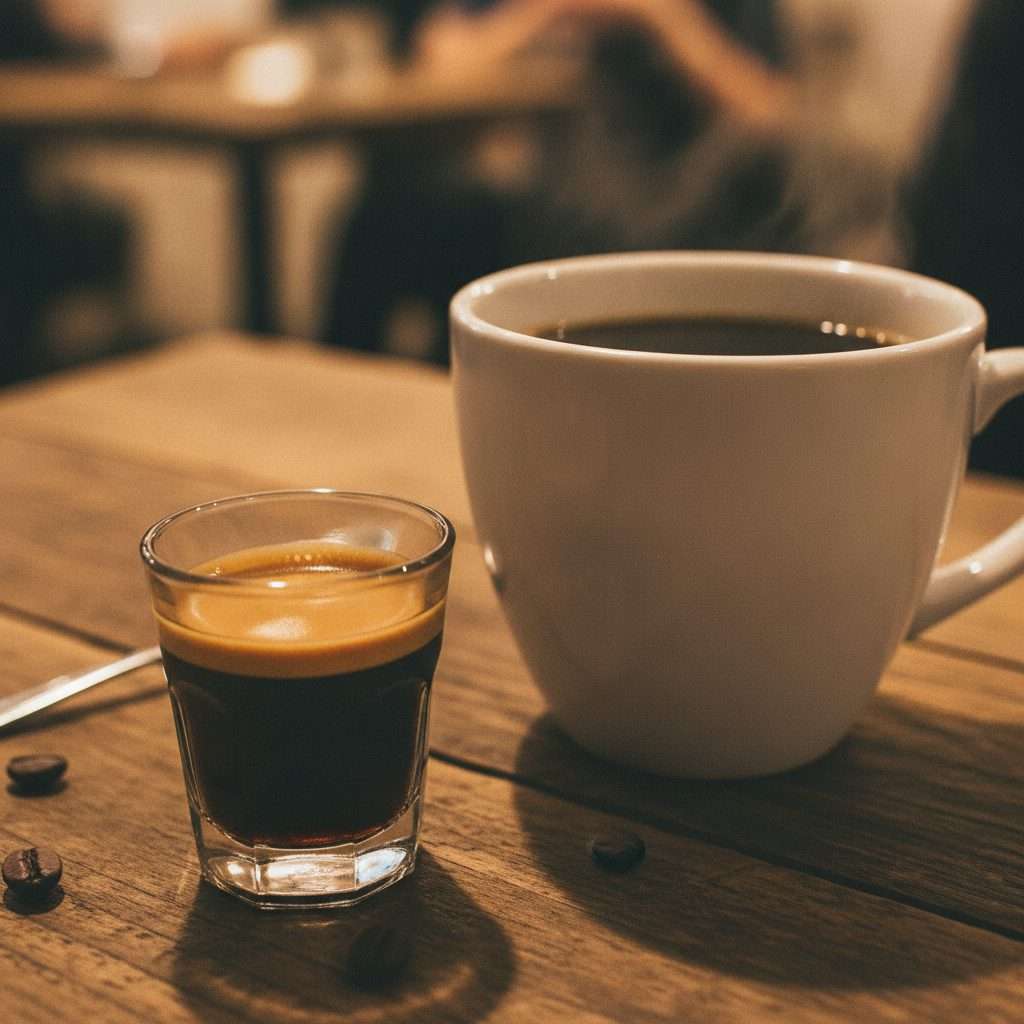
A 1 oz shot of espresso holds about 63 mg, five times the caffeine of the same volume of drip coffee. But a shot is small, so a single espresso still has less caffeine than a mug of filter coffee.
That is also why milk drinks mislead people. A latte, cappuccino or flat white has exactly the caffeine of the shots inside it. The milk adds volume, not caffeine. A 12 oz latte with one shot has less caffeine than an 8 oz drip coffee; with a double shot it has a bit more.
The bean matters most: Robusta vs Arabica
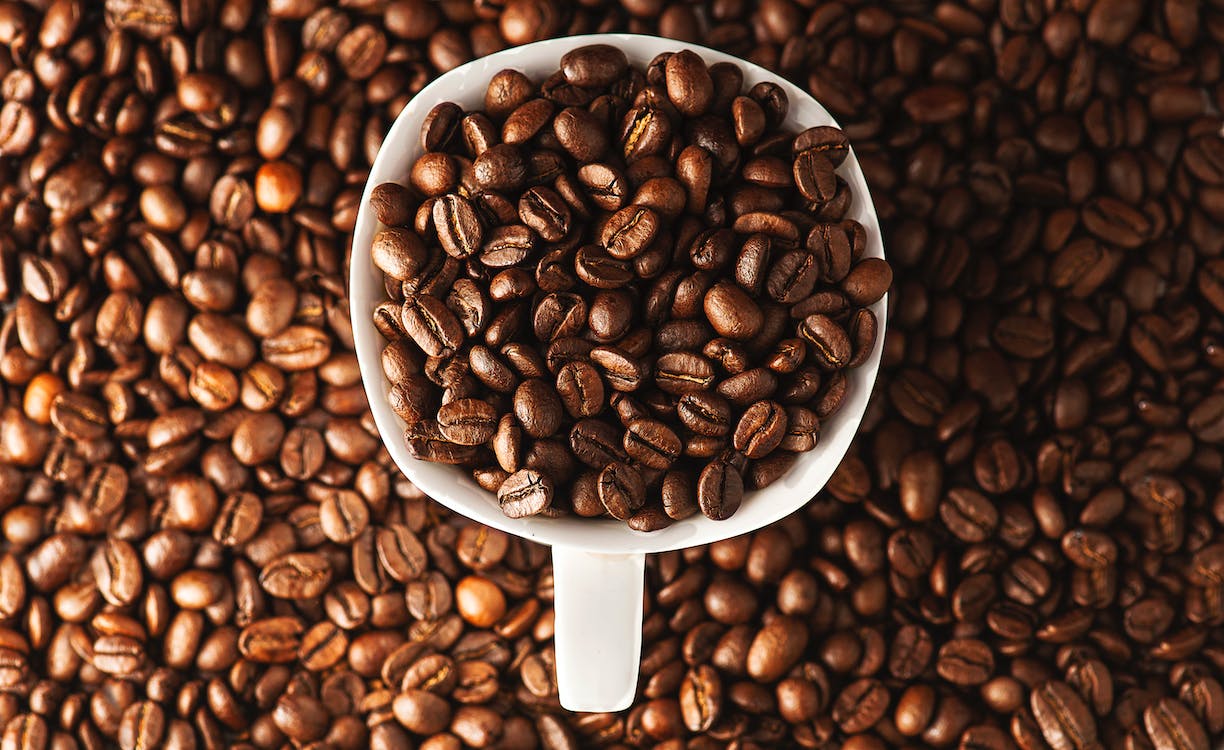
Arabica beans contain roughly 1.2–1.5% caffeine by weight. Robusta contains roughly 2.2–2.7%, close to double. Most specialty coffee is Arabica. Supermarket blends, instant coffee and the brands that sell themselves on strength often lean on Robusta. If the label says “extra strong” or “high caffeine”, check for Robusta in the blend. See Arabica vs Robusta for how the two also differ in taste.
Does dark roast have more caffeine?
No, and it is one of the most repeated myths in coffee. Roasting barely changes the caffeine in a bean. By weight, light and dark roasts are almost identical. Measured by the scoop, light roast actually comes out slightly ahead, because light-roasted beans are denser, so a scoop holds more coffee. The bold, bitter taste of a dark roast comes from the roast, not from extra caffeine.
How to get more (or less) caffeine from your cup
- Use more coffee. The dose matters more than anything else. See the coffee-to-water ratio guide.
- Choose a Robusta blend for more caffeine, or 100% Arabica for less.
- Brew longer or finer. French press and cold brew extract more caffeine than a quick pour-over with the same dose.
- Size up carefully. A 20 oz drip coffee can pass 200 mg on its own.
- Going the other way? See which coffee has the least caffeine.
How much is too much?
For most healthy adults, the US FDA puts the upper limit at about 400 mg of caffeine a day. That is roughly four 8 oz cups of drip coffee or two large cold brews. Lower limits apply during pregnancy, and some people feel jittery well below it. Our guide to how much caffeine is too much covers the details.