Exploring Coffee Beans: Arabica, Robusta, Liberica
Here’s a fun bar bet to win: ask the next three coffee snobs you meet to name the coffee species in their cup. Most will confidently say “Arabica” and stop there, like that settles it. It does not. There are four commercially grown coffee species on the planet, and the three you’ll actually run into are Arabica, Robusta, and the wildly underrated Liberica. They taste different, grow differently, cost different amounts, and end up in very different cups.
By the time you finish this, you’ll know exactly what sets these three coffee beans apart, why your morning blend tastes the way it does, and how to pick the right bean for the brew you actually love. No flowery nonsense, just the stuff that changes what’s in your mug.
Arabica, Robusta, Liberica: The Three Coffee Beans Explained
Quick orientation before we get into the weeds. Almost all the coffee sold worldwide comes from two species: Coffea arabica (roughly 60% of global production) and Coffea canephora, which everybody calls Robusta (most of the rest). Liberica is the rare one, well under 2% of the world’s coffee, and that scarcity is exactly why it’s worth knowing about. Here’s the cheat sheet, then we’ll break each one down properly.
- Arabica – sweeter, brighter, more aromatic, lower caffeine, grown high in the mountains, more expensive.
- Robusta – bolder, more bitter, nearly double the caffeine, tough as nails to grow, makes killer crema.
- Liberica – big oddball beans with a smoky, woody, fruity-floral profile you won’t forget.
Arabica: The Crowd Favorite (and It Earned It)
Arabica is the bean the specialty world is obsessed with, and honestly, it earned the hype. It grows at high altitudes – think 1,000 to 2,000+ meters – in cool, misty climates across Latin America, East Africa, and Ethiopia, where coffee literally started. Those slow-ripening cherries up in the mountains develop more sugar and more complex flavor compounds, which is the whole reason Arabica tastes the way it does.
What you’ll taste: a smoother body, a pleasant brightness, and that nuanced acidity people either chase or fear. Depending on where it’s grown, you’ll catch notes of berry, citrus, stone fruit, chocolate, caramel, or florals. It also carries less caffeine than Robusta – roughly 1.2% to 1.5% by weight – which is part of why it reads as softer and sweeter rather than punchy.
- Smooth body with bright, layered acidity
- Aromatic notes of fruit, chocolate, nuts, and florals
- Lower caffeine (about 1.2–1.5%)
- Grown at high altitude; pickier and pricier to farm
The catch: Arabica is a diva. It’s vulnerable to heat, frost, and disease (coffee leaf rust has wrecked entire harvests), so it costs more to grow and more to buy. You’re paying for fragility and flavor. If your bag says “100% Arabica,” that’s the cup it’s promising.
Robusta: The Strong, Underestimated Workhorse
Robusta gets dragged in coffee circles, and that’s not entirely fair. Yes, it’s bolder and more bitter, with an earthy, woody, sometimes nutty or chocolatey heaviness and very little of Arabica’s bright fruit. But it’s also a survivor: it grows at lower elevations, shrugs off heat, and resists the pests and diseases that flatten Arabica. That toughness is where the name comes from.
Its real superpower is caffeine – roughly 2.2% to 2.7% by weight, close to double Arabica. More caffeine means more bitterness (caffeine is bitter) and, conveniently, a natural defense against bugs. It also brings more of the compounds that build a thick, stable crema, which is exactly why a good shot of espresso often leans on some Robusta. A lot of instant coffee is Robusta too, because it’s cheaper and survives processing.
- Bold, earthy, more bitter flavor with little acidity
- High caffeine (about 2.2–2.7%) for a serious kick
- Heavy body and excellent crema in espresso blends
- Hardy, cheaper, grows at low altitude
Here’s the thing nobody tells you: cheap Robusta tastes like burnt rubber, but well-grown, carefully processed Robusta (the specialty world calls it “fine Robusta”) is genuinely good – deep, dark-chocolatey, and a fantastic backbone for an espresso blend. Don’t write off the whole species because of the worst version of it.
Liberica: The Rare Weirdo Worth Hunting For
Now for the bean almost nobody mentions, and the one I’d push you to try at least once. Liberica (Coffea liberica) comes from West and Central Africa originally and found a real home in Southeast Asia, especially the Philippines, where a beloved variety called Barako is brewed strong and proud. The beans are noticeably bigger and oddly almond-shaped, with a lopsided hook on one side – you can spot them by eye.
The flavor is the headline. Liberica is bold, smoky, and woody, with a startling floral, jackfruit-like fruitiness and an aroma some people describe as almost savory. It’s polarizing in the best way. It also makes up well under 2% of world production, so it’s harder to find and usually pricier when you do.
- Bold, smoky, woody flavor with floral and jackfruit notes
- Large, irregular, almond-shaped beans
- Rare – under 2% of global coffee
- A genuinely distinctive, memorable cup
If you’ve gotten comfortable telling Arabica from Robusta and you want your palate to grow up a little, track down a bag of Liberica. It’s the kind of coffee that makes you stop scrolling your phone and actually pay attention.
Arabica vs. Robusta vs. Liberica at a Glance
If you only remember one section, make it this one. Same coffee questions, three different answers.
- Flavor: Arabica = sweet, bright, complex. Robusta = bold, bitter, earthy. Liberica = smoky, woody, floral-fruity.
- Caffeine: Robusta highest (~2.2–2.7%), Arabica lower (~1.2–1.5%), Liberica in between.
- Acidity: Arabica brightest, Robusta low, Liberica moderate and unusual.
- Growing altitude: Arabica high, Robusta low, Liberica low to mid.
- Price & availability: Robusta cheapest and everywhere, Arabica mid-to-premium, Liberica rare and pricey.
- Best for: Arabica for pour-over and black coffee, Robusta for espresso punch and instant, Liberica for adventurous sipping.
How to Choose the Right Bean for Your Cup
Don’t overthink it. Pick based on how you actually drink your coffee, not on what some forum says is “correct.”
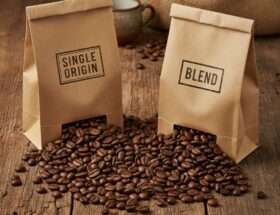
- You love bright, fruity, black coffee? Go single-origin Arabica and brew it as pour-over, drip, or in a good drip machine.
- You want a bold espresso with thick crema? Look for a blend with some quality Robusta in it – classic Italian-style blends do this on purpose.
- You need maximum caffeine? Robusta-forward blends win, full stop.
- You take milk and sugar and want strength? A Robusta-heavy blend cuts through dairy beautifully.
- You’re bored and curious? Hunt down Liberica and brew it strong. Treat yourself.
One non-negotiable no matter which bean you choose: buy whole beans, grind right before you brew, and store them well. Freshness beats species every single time. A stale bag of gorgeous Arabica will lose to a fresh bag of humble Robusta, so get this part right first. For more on narrowing it down, our guide to selecting the perfect coffee beans goes deeper on roast level and origin.
Frequently Asked Questions
What is the difference between Arabica, Robusta, and Liberica coffee beans?
They’re three different coffee species with different flavors, caffeine levels, and growing needs. Arabica is sweeter, brighter, more aromatic, and lower in caffeine, grown high in the mountains. Robusta is bolder, more bitter, and earthy, with nearly double the caffeine and a hardy, low-altitude nature that makes it cheaper. Liberica is the rare one – big, oddly shaped beans with a smoky, woody, floral-fruity profile and caffeine that sits between the other two.
Which type of coffee bean should I choose?
Match the bean to how you drink. Choose Arabica for smooth, complex black coffee and pour-overs. Choose Robusta (or a Robusta-heavy blend) for strong espresso, big crema, maximum caffeine, or coffee you’ll drink with milk. Choose Liberica when you want a genuinely unusual cup and you can find it. The best way to land on a favorite is to taste all three side by side.
Which coffee bean has the most caffeine?
Robusta, by a wide margin. It contains roughly 2.2–2.7% caffeine by weight versus about 1.2–1.5% for Arabica – close to double. That extra caffeine is also part of why Robusta tastes more bitter, since caffeine itself is bitter. Liberica falls between the two.
How should I store coffee beans to keep them fresh?
Keep them in an airtight, opaque container away from light, heat, air, and moisture – a cool, dark cupboard beats a sunny countertop. Skip the fridge, where moisture and odors sneak in and dull the flavor. Buy whole beans, grind right before brewing, and try to use them within two to four weeks of the roast date for the best taste. A quality burr grinder makes a bigger difference here than most people expect.
What grind size should I use for each brewing method?
Grind size is matched to brew time. Use a fine grind for espresso, a medium grind for drip and pour-over, and a coarse grind for French press and cold brew. The general rule: the longer the water touches the grounds, the coarser the grind. A consistent burr grinder is what makes any of these dial in properly.
The Last Sip
So the next time someone smugly tells you their cup is “just Arabica,” you’ll know there’s a whole world they’re skipping. Arabica for the sweet and complex, Robusta for the bold and caffeinated, Liberica for the brave – three beans, three completely different mornings. Now go grind something fresh and find out which one your heart actually belongs to.