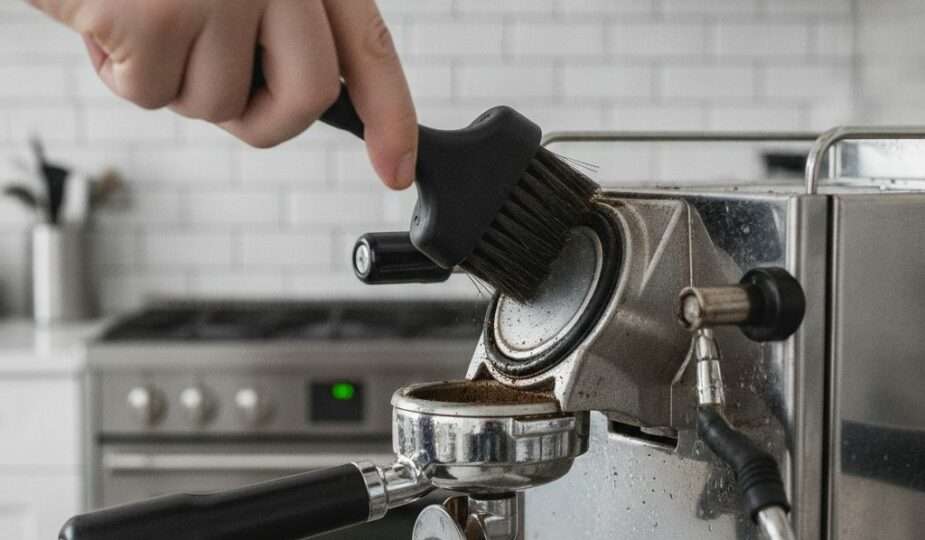
How to Clean Your Espresso Machine (Daily, Weekly, Monthly)
That bitter, ashy little kick in your morning shot? The one you keep blaming on the beans? Nine times out of ten it’s not the beans. It’s the gunk. Rancid coffee oils baked into your group head, a portafilter basket lined with last week’s grounds, a steam wand wearing a crust of scalded milk. Your machine is quietly seasoning every espresso with the flavor of neglect, and no fancy single-origin is going to out-muscle that.
Good news: cleaning an espresso machine is genuinely easy once you know the rhythm. Daily takes about 30 seconds. Weekly takes ten minutes. Monthly (descaling) takes an afternoon of mostly waiting. Below you get the exact routine baristas use, the real numbers (detergent doses, descale intervals, water-hardness thresholds), step-by-steps, and the mistakes that turn a $700 machine into a paperweight. Let’s get your shots tasting like they should.
Why a Clean Espresso Machine Actually Matters for Taste
Espresso is brutally unforgiving. You’re forcing near-boiling water through finely ground coffee at around nine bars of pressure, which means oils get extracted hard and fast. Those oils are delicious for about an hour. After that, exposed to air and heat, they go rancid, and rancid oil tastes exactly like it sounds: bitter, sour, stale, vaguely like a wet ashtray.
Every surface the brew touches collects this residue: the shower screen, the group head, the portafilter, the basket. Skip cleaning and you’re essentially re-brewing old coffee into every new cup. Add hard-water scale building up inside the boiler and you get a double whammy: bad flavor and a machine that slowly clogs, overheats, and dies young. Dialing in a perfect grind only matters if the path that water takes is clean. If you’re still chasing flavor, our guide to adjusting coffee strength for the perfect flavor pairs beautifully with a spotless machine.
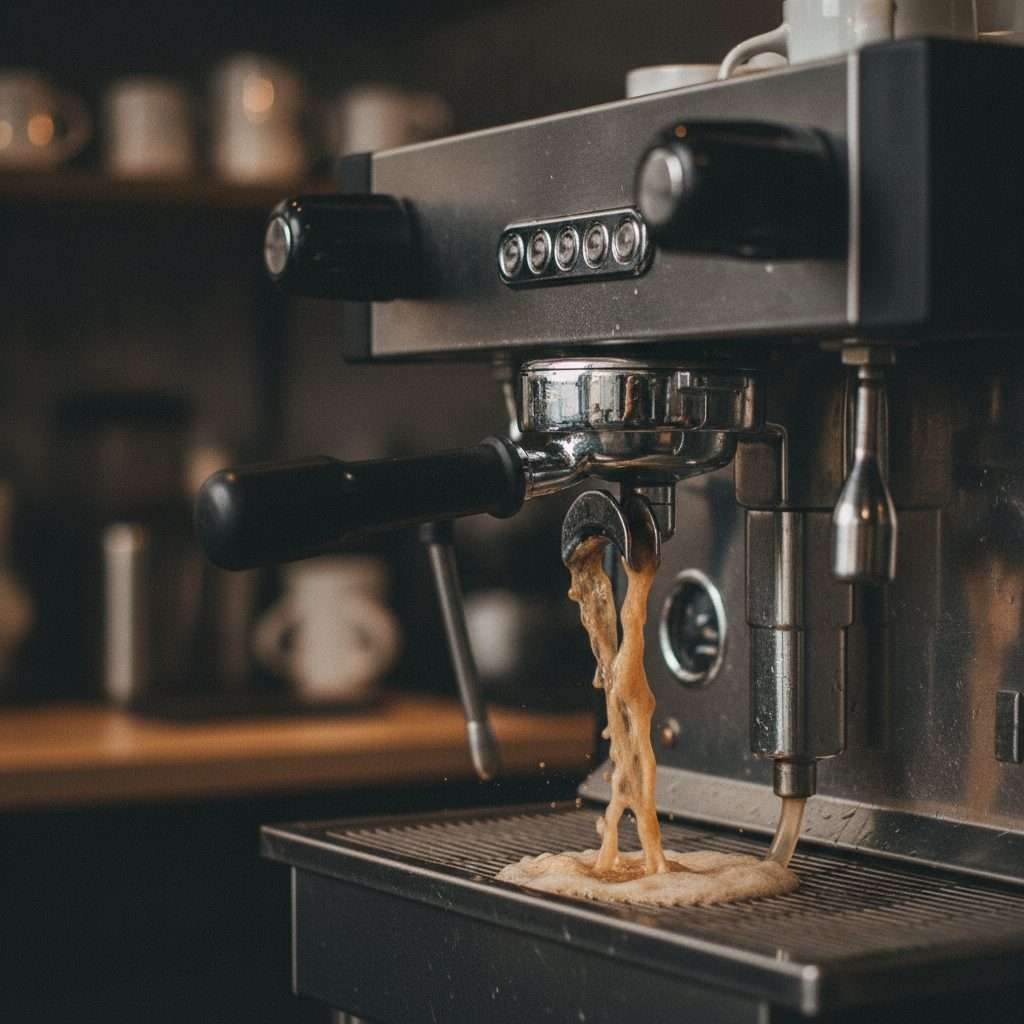
Daily Espresso Machine Cleaning (The 30-Second Habit)
Do this every single day you pull shots. It’s the difference between a machine that ages gracefully and one that turns on you in a year. Five tiny tasks:
- Purge the steam wand immediately after steaming. Open the steam valve for a one-second burst to blow milk out of the tip before it dries. Milk is sugar and protein; let it bake on and you get a crusty, bacteria-friendly mess.
- Wipe the steam wand with a damp cloth. A dedicated wand-only cloth, every time, while it’s still warm. Cold milk crust is a battle; warm milk wipes off in a second.
- Flush the group head. Run the group for two to three seconds with no portafilter to rinse loose grounds off the shower screen.
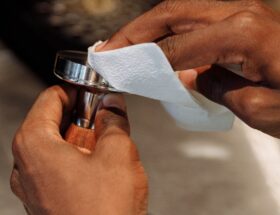
- Knock out and rinse the portafilter and basket. Dump the puck, rinse under hot water, give the basket a quick wipe. Don’t let it sit packed with a spent puck all day.
- Wipe down the steam wand and group head exteriors. Thirty seconds of cloth work keeps drips and splatter from becoming permanent.
The Daily Water Backflush (For 3-Way Valve Machines)
If your machine has a three-way solenoid valve (most prosumer and commercial machines do; check your manual), add a water-only backflush to your daily wind-down. You’ll need a blind basket: a portafilter basket with no holes. Lock it in, run the pump for five to ten seconds, stop, and let it release. The pressure can’t escape through the puck, so it routes water backward through the shower screen and out the solenoid valve, rinsing loose oils. Repeat three to five times. No detergent yet, just water.
Single-boiler machines without a three-way valve usually can’t backflush (the pressure has nowhere to vent and you can stress the pump). When in doubt, your manual is the boss.
Weekly Espresso Machine Cleaning (The Deep Backflush)
Once a week (every two if you’re a light user), it’s detergent time. This is what actually strips the rancid oils a water flush can’t touch. You’ll need an espresso-machine cleaning powder like Cafiza, Cafetto, or Urnex, and that blind basket again.
- Add about half a teaspoon (3 grams) of cleaning powder, or one cleaning tablet, to the blind basket. More is not better; you just rinse longer.
- Lock the portafilter into the group head.
- Run the pump for about 10 seconds, then stop and let the pressure release. You’ll see dirty brown water in the drip tray. That’s the point.
- Repeat that cycle five times.
- Remove the portafilter, dump the blind basket, and rinse it thoroughly.
- Re-lock the empty (rinsed) blind basket and run five to ten more flush cycles with clean water only to rinse all detergent out. Then pull a shot and dump it.
E61 group head owners, slow down. The classic E61 group is more sensitive; detergent backflushing every single week can wear the seals prematurely. Once every two to four weeks is plenty for E61 machines. Standard saturated groups handle weekly detergent fine.
Weekly: Soak the Portafilter, Baskets, and Steam Wand Tip
While the detergent does its thing, soak the removable parts. Dissolve a little of the same cleaner in hot water and drop in the portafilter spouts, baskets, and the unscrewed steam wand tip for 15 to 30 minutes. Scrub baskets with a soft brush; hold them to a light and you should see clean, open holes. For the steam wand, unscrew the tip and clear each hole with a pin or paperclip. A blocked wand hole ruins your microfoam, and good microfoam is half of a great homemade espresso drink.
Monthly (and Beyond): Descaling Your Espresso Machine
Here’s where people get confused, so let’s settle it: backflushing and descaling are completely different jobs. Backflushing cleans the brew path of coffee oils. Descaling removes mineral scale (calcium and magnesium from your water) from the boiler and internal lines. One is about coffee gunk; the other is about water gunk. You need both.
| Task | What it removes | Where | How often |
|---|---|---|---|
| Water backflush | Loose coffee oils | Group head & valve | Daily |
| Detergent backflush | Rancid coffee oils | Group head & valve | Weekly (E61: every 2-4 wks) |
| Descaling | Mineral/limescale | Boiler & water lines | Every 3-6 months |
How Often Should You Descale? It Depends on Your Water
Descaling frequency is driven almost entirely by water hardness and how much you brew. The general rule is every three to six months, but here’s the more honest breakdown:
| Your water | Rough hardness | Descale every |
|---|---|---|
| Hard municipal / tap | Above ~150 ppm TDS | 1-2 months |
| Medium / typical tap | ~75-150 ppm TDS | 3 months |
| Filtered or softened | Below ~75 ppm TDS | 4-6 months |
The single best way to descale less often (and brew better coffee) is to fix your water at the source. Hard, mineral-heavy water scales your boiler and dulls your flavor. Our deep dive on water quality and coffee brewing and the breakdown of the best water temperature for coffee are both worth a read before your next refill.
How to Descale, Step by Step
- Use a proper espresso-machine descaler (citric- or lactic-acid based). Mix per the bottle’s instructions; don’t freelance the dose.
- Empty the water tank and fill it with the descaling solution.
- Run roughly a third of the solution through the group head, a third through the steam wand, and let the rest sit in the boiler for 15-20 minutes to dissolve scale.
- Run the remaining solution through both outlets.
- Rinse hard: refill the tank with fresh water and run at least two full tanks through every outlet until there’s no acid smell or taste.
Never use plain white vinegar. It can leave a lingering taste, and on some machines the acidity damages internal seals and aluminum components. Spend the few dollars on real descaler. Also check your manual: a handful of machines (notably some with brass or aluminum boilers) have specific descaler requirements or warn against it entirely.
Common Espresso Machine Cleaning Mistakes
- Backflushing a machine that can’t take it. No three-way valve usually means no backflushing. Check first.
- Using dish soap or vinegar. Soap residue tastes awful and is hard to fully rinse; vinegar can corrode. Use products made for espresso.
- Skipping the rinse. Detergent or descaler left in the system tastes worse than the gunk you removed. Rinse like you mean it.
- Forgetting the steam wand tip. Dried milk inside those tiny holes wrecks your foam and breeds bacteria.
- Letting the puck sit all day. That spent puck in your portafilter is oil oxidizing in real time.
- Cleaning the machine but ignoring the grinder. Stale grounds and old oils live there too. Your coffee grinder needs love on its own schedule.
Your Espresso Machine Cleaning Schedule at a Glance
- Daily: Purge and wipe the steam wand, flush the group, rinse the portafilter and basket, water backflush (if equipped).
- Weekly: Detergent backflush; soak baskets, portafilter, and wand tip (E61: detergent every 2-4 weeks).
- Monthly to every 6 months: Descale, based on your water hardness.
- As needed: Replace water filters and gaskets per your manual.
Keep this rhythm and your machine will pull cleaner, sweeter shots for a decade. Once the hardware’s spotless, the only variables left are technique and beans, which is exactly where the fun lives, like nailing your espresso tamp and learning how to dial in your espresso grind.
Frequently Asked Questions
How often should I backflush my espresso machine?
Water-only backflush daily if you pull shots that day. Detergent backflush weekly for standard group heads, or every two to four weeks for E61 machines to protect the seals. Only backflush if your machine has a three-way solenoid valve; otherwise stick to flushing the group head and cleaning the portafilter.
What’s the difference between backflushing and descaling?
Backflushing pushes water (and detergent) backward through the group head to clear rancid coffee oils from the brew path. Descaling runs an acidic solution through the machine to dissolve mineral scale from the boiler and water lines. Different problems, different products, different schedules. You need both.
Can I use vinegar to descale my espresso machine?
Skip it. Vinegar can leave a stubborn taste and, on some machines, corrode seals and aluminum parts. Use a purpose-made citric- or lactic-acid descaler and follow the dilution on the label, then rinse with at least two full tanks of fresh water.
How do I know if my espresso machine needs descaling?
Watch for slower water flow, longer heat-up times, sputtering or weak steam, knocking sounds, and a flat or off taste. Those are scale symptoms. Don’t wait for them, though: descale on a schedule based on your water hardness, every one to six months.
What cleaning products do I actually need?
Three things: an espresso-machine detergent powder or tablet (Cafiza, Cafetto, Urnex) for backflushing and soaking, a dedicated descaler for the boiler, and a blind basket plus a soft brush and microfiber cloths. That’s the whole kit, and it’ll last you ages.
A clean machine isn’t a chore, it’s the cheapest upgrade you’ll ever make to your coffee. Build the daily habit, keep the weekly and monthly appointments, and your espresso will thank you one gorgeous, oil-free shot at a time. Now go pull something delicious.