
Coffee Aromas: Exploring the Complex World of Coffee Scents
Pour a fresh cup, lean in, and inhale before you sip. That hit of warm, toasty, almost-sweet air? That’s most of what you’re about to “taste.” Your tongue only does five jobs — sweet, salty, sour, bitter, and savory — and everything else, all the blueberry and brown sugar and toasted-almond magic, comes through your nose. So if your coffee has been smelling like a whole lot of nothing lately, this one’s for you. Let’s fix it.
Why Coffee Smells So Good (And Why It Matters More Than You Think)
Aroma isn’t the warm-up act for flavor. It basically is the flavor. Pinch your nose shut and take a sip of coffee — go ahead, I’ll wait. Bitter water, right? Let go of your nose and suddenly the caramel and chocolate come flooding back. That’s coffee aroma doing the heavy lifting it never gets credit for.
Your taste buds can only flag a handful of basic tastes. Your nose, on the other hand, is a show-off: it can pick out thousands of distinct smells. When you sip, aromas also travel up the back of your throat to your nasal passages (that’s “retronasal” smelling, and it’s the secret behind why food tastes flat when you’re congested). So when people say a coffee is “fruity” or “nutty,” they’re describing what their nose found, not their tongue.
What’s actually in the cup? Scientists have identified more than 800 volatile aromatic compounds in roasted coffee — but here’s the part that keeps it from being overwhelming: only around 40 of them do the real aromatic work. So you don’t need a chemistry degree. You need a decent cup and the nerve to actually smell it.
Three things decide what your coffee smells like:
- The beans — origin and variety set the baseline. Ethiopian naturals lean fruity and floral; Brazilian beans lean nutty and chocolatey.
- The roast — light roasts keep the bright, fruity, acidic notes; dark roasts trade those for bold, smoky, bittersweet ones. (More on that in our breakdown of the difference between light, medium, and dark roast coffee.)
- The brew — grind, water temperature, and method decide which of those compounds actually make it into your cup.
Did you know that coffee is actually a fruit? The coffee bean is the seed inside a small, cherry-like fruit called a coffee cherry. These fruits grow on trees and are harvested and processed to extract the beans we use to make coffee. So when you're drinking a cup of coffee, you're actually enjoying the flavors and aromas of a fruit!
The Quick Science of Smelling Your Coffee
How Your Nose Actually Reads a Cup
When coffee is hot, those aromatic compounds turn volatile — they evaporate and drift up into the air. They hit the olfactory receptors high up in your nasal cavity, which fire off a signal to your brain, which says “ah, chocolate.” Two routes get them there: straight up your nose (orthonasal, the sniff) and up the back of your throat as you swallow (retronasal, the sip). Smart move: smell your coffee twice — once before the first sip, once after — because cooler coffee releases a different, often sweeter set of aromas. Your hot cup and your lukewarm cup are basically two different drinks.
The Aroma Wheel: What You’re Actually Smelling
Coffee pros use a flavor wheel to name what they smell, and you can borrow it. Most coffee aromas fall into a few big families. Once you know the categories, your nose suddenly has words:
- Fruity — berry, citrus, stone fruit. Common in light-roast African and washed coffees.
- Floral — jasmine, rose, that delicate “is this perfume?” lift. Hello, Ethiopian.
- Nutty & chocolatey — almond, hazelnut, cocoa, dark chocolate. Classic in Brazilian and many medium roasts.
- Caramelly & sweet — brown sugar, honey, maple, toasted marshmallow. The Maillard reaction’s greatest hits.
- Spicy — cinnamon, clove, black pepper.
- Roasty & earthy — toast, smoke, tobacco, cedar. The hallmark of darker roasts.
You don’t have to nail the exact note on day one. Start broad — “fruity or nutty?” — then narrow down. “Fruity— okay, dark fruit or bright citrus?” That’s how every cupper you’ve ever met started.
Train Your Nose in Five Minutes a Day
Smelling well is a skill, not a gift, and it’s an easy one to build. A few cheats that work:
- Grind right before you brew. Whole beans lock aroma in; the second you grind, the clock starts ticking. Ground coffee goes stale and flat within minutes to hours, not days. This is the single biggest aroma upgrade most people are skipping.
- Smell the dry grounds first. Stick your nose in the grinder or bag and inhale. That’s the “fragrance,” and it’s a preview of the cup.
- Inhale slowly, then stop. Two or three gentle sniffs, not one giant huff — your nose tires fast and a big inhale just overwhelms it.
- Build a smell library. Actually go sniff cinnamon, cocoa powder, a lemon peel, fresh berries. You can only name what your brain has a file for.
- Compare two coffees side by side. Differences jump out way faster than anything tasted alone. Brew a light roast and a dark roast together and the contrast does the teaching for you.
How to Get a More Aromatic Cup: The No-Nonsense Playbook
You can have great beans and still brew a cup that smells like sad cardboard. Most aroma loss happens at home, after the roaster did their job. Here’s where to actually win.
1. Buy Fresh, and Buy Whole
Roast date beats “best by” date every single time. Look for beans roasted within the last 2 to 4 weeks — that’s the aroma sweet spot. Skip the giant tub from the back of the supermarket shelf and find a roaster who actually prints a roast date. Need help picking? Our guide to selecting the perfect coffee beans walks you through it. And buy whole bean — non-negotiable.
2. Store It Like You Mean It
Aroma’s four enemies: air, light, heat, and moisture. Beat all four with an opaque, airtight storage container kept in a cool, dark cupboard — not on the counter next to the stove, and not in a clear glass jar in the sun looking pretty.
Do this, not that: Don’t keep coffee in the fridge. It’s humid in there, and beans soak up moisture and fridge smells like a sponge. The freezer is fine for long-term backup if it’s truly airtight, but pull out only what you’ll use and never refreeze. Your daily stash lives in the cupboard.
3. Grind Right (and Right Before Brewing)
Grinding exposes all that locked-in surface area to water, which is exactly how aroma escapes into your cup. But grind size has to match your method, and consistency matters: a cheap blade grinder makes uneven chunks and dust, which brew unevenly and taste muddy.
Suggested tip: A burr grinder is the upgrade that pays off forever. Coarse grind for French press, medium for pour-over and drip machines, fine for espresso. Dial the grind to the brewer, not the other way around.
4. Get the Water Temperature Right
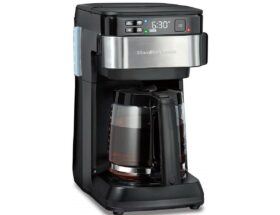
Too cool and you under-extract — sour, thin, weak aroma. Too hot and you scorch it — harsh and bitter. The Goldilocks zone is 195°F to 205°F (90°C to 96°C), which is just off the boil. No thermometer? Boil your kettle, then let it sit for 30 to 45 seconds before you pour. That’s it. Prefer to take temperature out of your hands entirely? A quality machine from our roundup of the best coffee makers holds that brewing range for you automatically.
5. Nail Your Ratio and Method
A solid starting point is the “golden ratio”: roughly 1 part coffee to 16 to 18 parts water by weight — about 60 grams of coffee per liter, or 2 tablespoons of grounds per 6 ounces of water if you’re eyeballing it. A good coffee scale will do more for your coffee than almost any gadget you can name.
Method changes the aroma profile too, so it’s worth playing:
- Pour-over (try the Hario V60) — clean, bright, shows off delicate floral and fruity notes.
- French press — full, heavy, rich-bodied with bold roasty aromas.
- AeroPress (see our AeroPress guide) — smooth and forgiving, great for beginners.
- Siphon (the gorgeous, theatrical siphon method) — clean and aromatic, and a genuine party trick.
- Vietnamese phin (learn the bold Vietnamese style) — intense, sweet, and unapologetically strong.
6. Slow Down and Actually Smell It
This is the free upgrade. Before your first sip, hold the cup under your nose and take two slow breaths. Note what you get. Sip. Then come back when it’s cooled a bit and smell again — you’ll catch sweeter, deeper notes the hot cup was hiding. Most people inhale their coffee at the door without ever smelling it. Don’t be most people.
7. Keep a Coffee Journal
Jot down the bean, origin, roast date, how you brewed it, and what you smelled. Three weeks of this and your palate sharpens fast, because naming a thing is how you learn to find it again. It also turns “this one’s good” into “this one’s a washed Ethiopian with jasmine and lemon” — which is a much better story at brunch.
8. Try Cupping (the Pro Move)
Cupping is how the industry evaluates coffee: coarse grounds, hot water, no filter, and a ritual of smelling, breaking the crust, and slurping. It is the fastest way to train your nose, and it’s a blast. Hunt down a local roastery that hosts cupping sessions, or set up a mini version at home with two or three coffees side by side. Want to geek out further on the bean itself? Our piece on exploring coffee beans is a good next stop.
Quick Takeaways
- Aroma carries most of coffee’s flavor — your nose does the work your tongue gets credit for.
- Roasted coffee has 800+ aromatic compounds, but only about 40 really shape what you smell.
- Freshness wins: buy beans roasted in the last 2 to 4 weeks, store them airtight in a cool, dark cupboard, and grind right before brewing.
- Brew in the 195–205°F range at a 1:16 to 1:18 coffee-to-water ratio.
- Smell your cup twice — hot and cooled — to catch the full range of notes.
FAQ
Why does my coffee smell amazing in the bag but flat in the cup?
That gorgeous bag smell is aroma escaping — which means it’s leaving the beans, not staying in them. Usually the culprit is stale beans, pre-ground coffee, or water that’s too cool. Grind fresh, brew hotter (195–205°F), and use beans with a recent roast date.
Does adding spices or chocolate really boost coffee aroma?
It layers on complementary scents rather than improving the coffee itself, but it’s a genuinely fun trick. A pinch of cinnamon, cardamom, or vanilla in the grounds, or a square of dark chocolate on the side, plays beautifully with coffee’s natural notes. Just start small — you’re seasoning, not redecorating.
How fresh do beans need to be?
Aim to use beans within about a month of their roast date for peak aroma. They’re not “bad” after that — just quieter. Buy in amounts you’ll actually finish in two to three weeks.
Is more caffeine the same as more aroma?
Nope — totally separate. Aroma comes from those volatile compounds; caffeine is odorless. If you’re curious how much you’re actually drinking, here’s how much caffeine is in a cup of coffee.
Now Go Smell Your Coffee Like You Mean It
Here’s the whole thing in a nutshell: aroma is where coffee gets interesting, and most of it is yours for free if you just slow down and pay attention. Buy fresh, store smart, grind at the last second, brew hot, and actually put your nose in the cup before you drink it. Do that and an ordinary Tuesday morning quietly turns into something worth lingering over.
So tomorrow, before you take that first gulp on autopilot — pause, breathe it in, and see what your nose tells you. I think you’ll be surprised what’s been hiding in there all along.
Continue Your Coffee Journey:
- Ten Coffees: Explore more coffee resources and brewing methods.
- How to Vietnamese Coffee: The Strong & Bold Coffee
- How to Hario V60: The Ultimate Guide to Making Perfect Coffee
- How to Siphon Coffee: The Slow and Elegant Way to Brew a Perfect Cup
- How to Aeropress: The Ultimate Guide to Making Amazing Coffee at Home
- Coffee Aromas: A Guide to Enhancing Coffee Scents
- And many more coffee resources await you on the Ten Coffees website!